






































The ceremonial confetti had barely been swept from the pavement outside the Nasdaq MarketSite in Times Square before the arithmetic of global finance caught up with artificial intelligence. On Thursday, ticker symbol ANTH had commanded the greatest public offering in financial history, leaping 33.7% above its offer price to close comfortably above a $2 trillion valuation. By Friday morning, the celebratory music was replaced by the cold clatter of institutional sell orders.
In pre-market trading in New York, Anthropic plunged by as much as 11.4%, sliding toward the double-digit mark as early institutional backers and fast-money hedge funds moved swiftly to lock in windfall paper gains. The drop was not an isolated blip in a speculative single-stock name. Because the AI infrastructure boom has become the central load-bearing pillar of global equity markets, Anthropic’s morning-after stumble triggered an immediate chain reaction across trading desks from Tokyo to Frankfurt.

Asian Contagion and the Global Semiconductor Pyramid
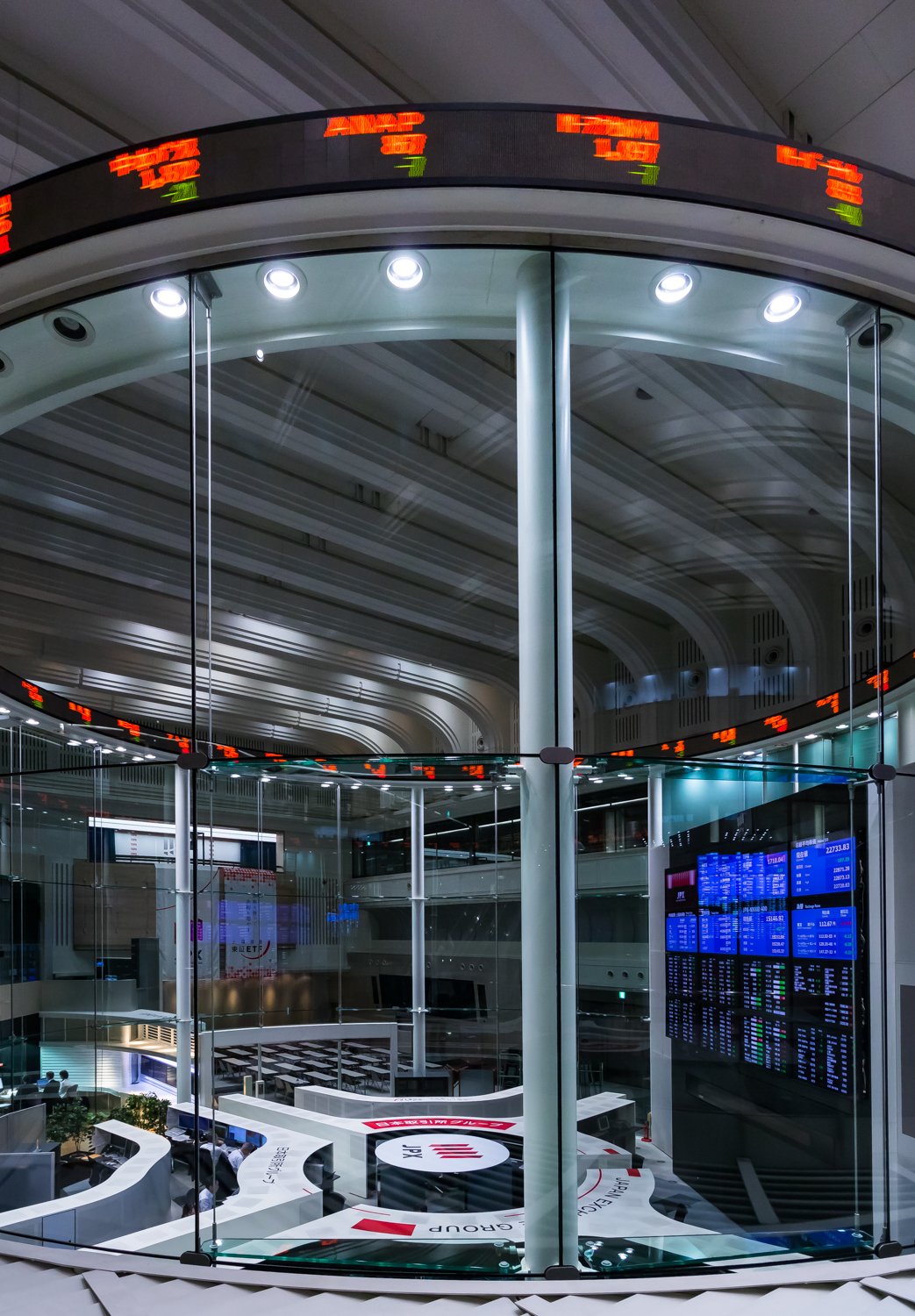
The shockwaves were felt earliest and most acutely in Japan. During Asian trading hours, shares of SoftBank Group (the Japanese tech conglomerate whose portfolio is heavily weighted toward generative AI startups and semiconductor intellectual property) tumbled 9.8% on the Tokyo Stock Exchange. It marked SoftBank’s steepest single-day collapse in more than two years, wiping billions off its balance sheet in a matter of hours.
The contagion spread rapidly through the physical backbone of the AI supply chain. In Taipei, Taiwan Semiconductor Manufacturing Company (TSMC) shed 4.6%, while South Korean memory titan SK Hynix slid more than 6%. In Europe, Dutch lithography monopoly ASML fell nearly 5% at the market open.
When the market’s preeminent foundation model creator experiences a sharp repricing, the entire silicon pyramid beneath it (from raw silicon wafers to advanced packaging and high-bandwidth memory chips) is immediately forced to recalibrate its forward revenue assumptions. Equipment manufacturers and foundries whose multi-year production schedules rely on unceasing demand from AI hyperscalers suddenly look vulnerable to delayed purchase orders and inventory build-ups.
Capital Burn Velocity and ROIC Stress Tests
The fundamental catalyst behind Friday’s reversal was a sudden, collective reassessment of corporate cash burn. During the euphoria of the initial listing, underwriters and retail buyers enthusiastically embraced the narrative that foundation models represent utility-scale infrastructure. But utilities take decades of patient capital expenditure to build, and they typically operate with regulated rates of return, not the astronomical valuation multiples demanded by venture-backed software pioneers.
As institutional portfolio managers combed through Anthropic’s full regulatory prospectus late Thursday night, the sheer velocity of the company’s capital requirements came into sharp focus. Training next-generation frontier reasoning systems and subsidizing enterprise token consumption requires tens of billions of dollars in annual server cluster reservations, custom networking hardware, and multi-gigawatt power contracts.
“If enterprise monetization expands linearly while capex compounds exponentially, the pathway to GAAP profitability is far longer and more treacherous than the IPO marketing roadshow suggested.”
Wall Street Institutional Analyst Note
Wall Street analysts began publishing sobering notes stress-testing Anthropic’s Return on Invested Capital (ROIC). If enterprise monetization, predicated on software automation in corporate legal departments, coding pipelines, and financial analysis, expands at a linear pace while infrastructure capex compounds exponentially, the pathway to sustainable GAAP operating profitability looks significantly longer and far more treacherous than the IPO marketing roadshow suggested.
Private Venture Headaches and Macro Rate Pressures
The repricing also created immediate headaches across Silicon Valley’s private venture ecosystem. For the past eighteen months, dozens of late-stage artificial intelligence startups had raised funding at dizzying valuations by benchmarking their private share prices to the anticipated public multiples of Anthropic and OpenAI.
A sharp, double-digit contraction in Anthropic’s trading price forces venture capital limited partners to mark down their carrying valuations. If public markets refuse to support a $2 trillion valuation without ironclad cash flow guarantees, private capital rounds will inevitably face down-rounds and painful structural recapitalizations.
This anxiety was compounded by macroeconomic warnings that had been brushed aside during Thursday’s listing euphoria. At the APEC CEO Summit in Shenzhen, International Monetary Fund Managing Director Kristalina Georgieva explicitly warned that the global race for AI infrastructure is exerting structural upward pressure on capital costs. The demand for massive computing clusters, specialized transmission grids, and nuclear energy generation requires tens of trillions of dollars in debt financing, competing directly with sovereign borrowing and forcing central banks to keep benchmark interest rates elevated.
For institutional investors holding high-multiple tech equities, Georgieva’s warning was a stark reminder: in an environment where capital costs remain high for longer, future cash flows generated five or ten years down the road must be discounted at far higher hurdle rates. Speculative bets that seemed reasonable in a zero-interest-rate regime look dangerously overextended when corporate borrowing commands 6% or 7% yields.
Competitive Realities and Market Discipline
Furthermore, competitive realities cannot be papered over by listing ceremonies. Anthropic raised between $81 billion and $100 billion in its public debut, establishing the largest war chest in tech history. Yet that capital hoard must now be spent defending its competitive moat against formidable adversaries who generate immense operating cash flows from legacy monopolies.
Alphabet and Microsoft possess thriving search and cloud empires capable of subsidizing AI infrastructure investments indefinitely, while open-weight model consortia continually drive the marginal price of model inference toward zero. When corporate clients realize that a lightweight, open-source model running on private servers can perform routine enterprise tasks at a fraction of the cost of proprietary API calls, pricing power erodes rapidly.
Friday’s sell-off does not imply that Anthropic is fundamentally unsound, nor does it invalidate the transformative economic potential of generative intelligence. What it illustrates is the classic mechanics of market exhaustion. When a sector is priced for absolute, flawless perfection, any microscopic friction, such as an analyst downgrade, a macro rates warning, or a wave of profit-taking by early employees and sovereign wealth funds, results in violent downward revisions.
What to watch next: How ANTH shares behave during standard regular-hours trading as retail volume enters the order book, whether major Wall Street prime brokerages maintain their initial $120 to $140 price targets in post-debut research initiations, and whether the sell-off spills into next week’s options expiration cycles. The easy money of the artificial intelligence boom was minted in the private markets and celebrated on the IPO podium. The punishing discipline of public quarterly capitalism has officially begun.