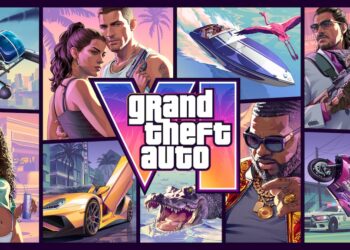








































By any traditional commercial yardstick, Thursday was the single most lucrative day in the history of global entertainment. In an official regulatory filing with the US Securities and Exchange Commission, publisher Take-Two Interactive confirmed that Grand Theft Auto VI generated $2.3 billion in net revenue within its first twenty-four hours on sale. More than 24 million retail and digital copies moved across PlayStation 5 and Xbox Series X|S consoles, eclipsing the previous benchmark established by Grand Theft Auto V in 2013, which took three full days to reach the one-billion-dollar milestone.
Hollywood box office openings, streaming platform subscriber spikes, and pop stadium tours do not operate in this economic stratosphere. At $70 a box, consumers queued in midnight lines across five continents and choked digital storefronts to purchase a ticket to Leonida.
The $9.99 Tollbooth in Single-Player Story Mode
Yet by Friday morning, the celebratory champagne on Wall Street had been thoroughly curdled by an escalating consumer mutiny. As millions of players advanced past the prologue and began exploring the neon corridors and sun-bleached highways of Vice City, they encountered an unwelcome relic of modern software monetization: a digital tollbooth erected inside the single-player narrative campaign.
Players attempting to purchase high-capacity ten-car garages, acquire specialized engine modifications for getaway vehicles, or unlock certain prime oceanfront safehouses discovered that the game prompted them to link an active GTA+ subscription. The premium membership service, priced at $9.99 per month, was originally introduced in 2022 to milk recurring revenue from the aging multiplayer servers of Grand Theft Auto Online. Pushing that subscription into an offline, narrative-driven story mode featuring Jason and Lucia broke an unwritten social contract that has governed prestige single-player gaming for three decades.
“Pushing a recurring monthly subscription into a $70 offline narrative campaign is industry-grade bait-and-switch. The disk should contain the complete vision, not a tollbooth for basic garages.”
PC Gamer Analysis on GTA+ Integration
The backlash across social platforms, Reddit communities, and gaming forums was swift and unforgiving. Critical commentary from PC Gamer drew direct parallels to the gaming industry’s original sin of downloadable content, framing the GTA+ single-player integration as “subscription-based horse armor,” a direct reference to Bethesda’s widely mocked 2006 microtransaction in The Elder Scrolls IV: Oblivion.
For years, core gamers tolerated aggressive microtransactions and predatory loot boxes in multiplayer titles under the pragmatic assumption that persistent server infrastructure, seasonal updates, and competitive matchmaking required ongoing operational capital. The single-player campaign, however, remained sacred ground. When a customer pays $70 upfront for an offline interactive story, the expectation is absolute: the disk contains the complete artistic vision, and every asset rendered in the game world should be earned through skill, exploration, and time, not a recurring direct debit.

Production Costs, Wall Street Demands, and Broken Immersion
Rockstar’s quiet erosion of that boundary highlights an acute structural dilemma facing parent company Take-Two. Developing Grand Theft Auto VI over more than eight years—weathering pandemic disruptions, intense crunch scrutiny, an unprecedented 2022 pre-release data breach, and astronomical production budgets estimated between $1 billion and $2 billion—created a terrifying financial gravity.
Even a $2.3 billion opening weekend cannot satisfy equity analysts who demand continuous, quarter-over-quarter revenue expansion rather than cyclical, decade-long spikes. By tethering single-player conveniences and cosmetic perks to GTA+, Take-Two attempted to convert 24 million one-time box purchasers into perpetual subscription annuities on day one.
The corporate miscalculation is profound. Gamers are notoriously sensitive to perceived nickel-and-diming, particularly from publishers that already post record-shattering profits. The locked assets are not peripheral trinkets; in a Grand Theft Auto title, collecting, customizing, and storing rare luxury vehicles is the core experiential loop. Restricting garage space in a criminal sandbox game is akin to charging a subscription fee to reload weapons in a first-person shooter.
It also undermines the narrative immersion Rockstar spent hundreds of millions of dollars crafting. Players following Lucia and Jason’s criminal partnership in Leonida suddenly find the game’s satirical depiction of runaway American consumerism mirrored in its own user interface. When the game parodies modern corporate greed in an in-game television commercial, only to present the player with a real-world subscription prompt moments later, satire collapses into cynicism.
The CyberLeek Dev Build Leak and Community Fallout
To compound Rockstar’s public relations headache, an online hacker collective operating under the moniker CyberLeek threw gasoline on the fire. Early Friday, the group leaked what it claimed was a debug development build of the game compiled for Xbox consoles, distributing proprietary configuration files across encrypted channels.
According to reporting from Eurogamer, community dataminers sifting through the leaked binaries quickly uncovered internal code flags demonstrating that the GTA+ paywalls were inserted late in the development cycle. Several vehicle customization options and property deeds currently locked behind the monthly subscription appear to have been originally designed as standard in-game progression rewards, unlocked by completing side heists and story missions. Players who spent years anticipating an authentic narrative journey now possess technical confirmation that functional elements were actively cordoned off to serve recurring billing targets.
The leak transformed what might have been dismissed as an annoying marketing experiment into an outright breach of trust. Accusations of bad faith have ignited review-bombing campaigns across retail aggregators, threatening the pristine Metacritic consensus that accompanied initial critical reviews. Players feel bait-and-switched: lauded in reviews for unprecedented technical fidelity, only to find corporate tollgates embedded in their personal inventory screens.
What This Means for the Video Game Industry
The broader video game industry is watching this clash with intense anxiety. Over the past three years, the games sector has shed tens of thousands of developer jobs, canceled mid-tier projects, and retreated into live-service formulas that frequently fail within months of launch. If Rockstar Games, the undisputed gold standard of narrative design and commercial clout, cannot release an uncompromised single-player masterpiece without shoehorning monthly subscriptions into the dashboard, it signals a bleak normalization for the entire medium. Other major publishers will inevitably conclude that if Rockstar can survive the blowback, single-player monetization will become standard industry practice.
What to watch next: Whether Take-Two executive leadership issues a conciliatory title update walking back the single-player GTA+ restrictions ahead of the critical holiday sales window, how the CyberLeek leak impacts upcoming server deployments for the eventual rollout of GTA Online 2, and whether community backlash suppresses the adoption rate of the subscription itself. Rockstar proved it can command the attention and wallets of the entire planet. But by treating its most dedicated story players as monthly subscribers rather than patrons of art, the studio turned its greatest financial triumph into an unforced reputational wound.