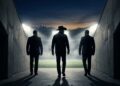



































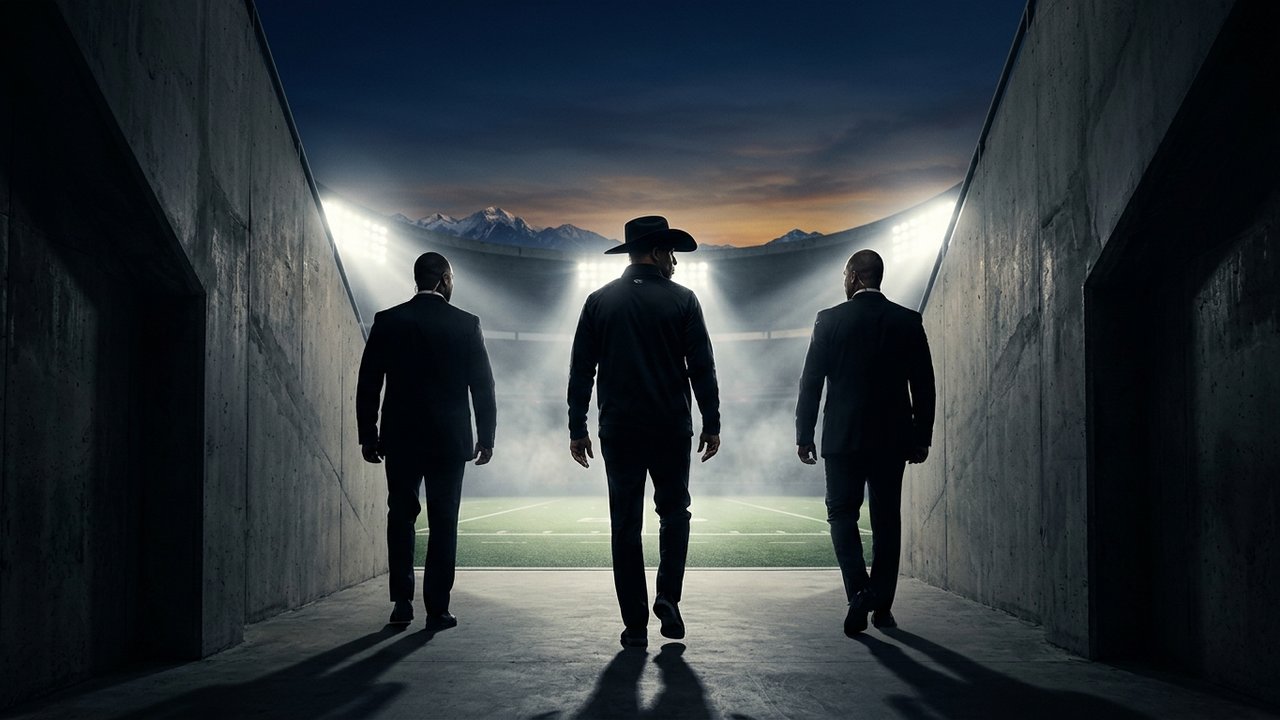
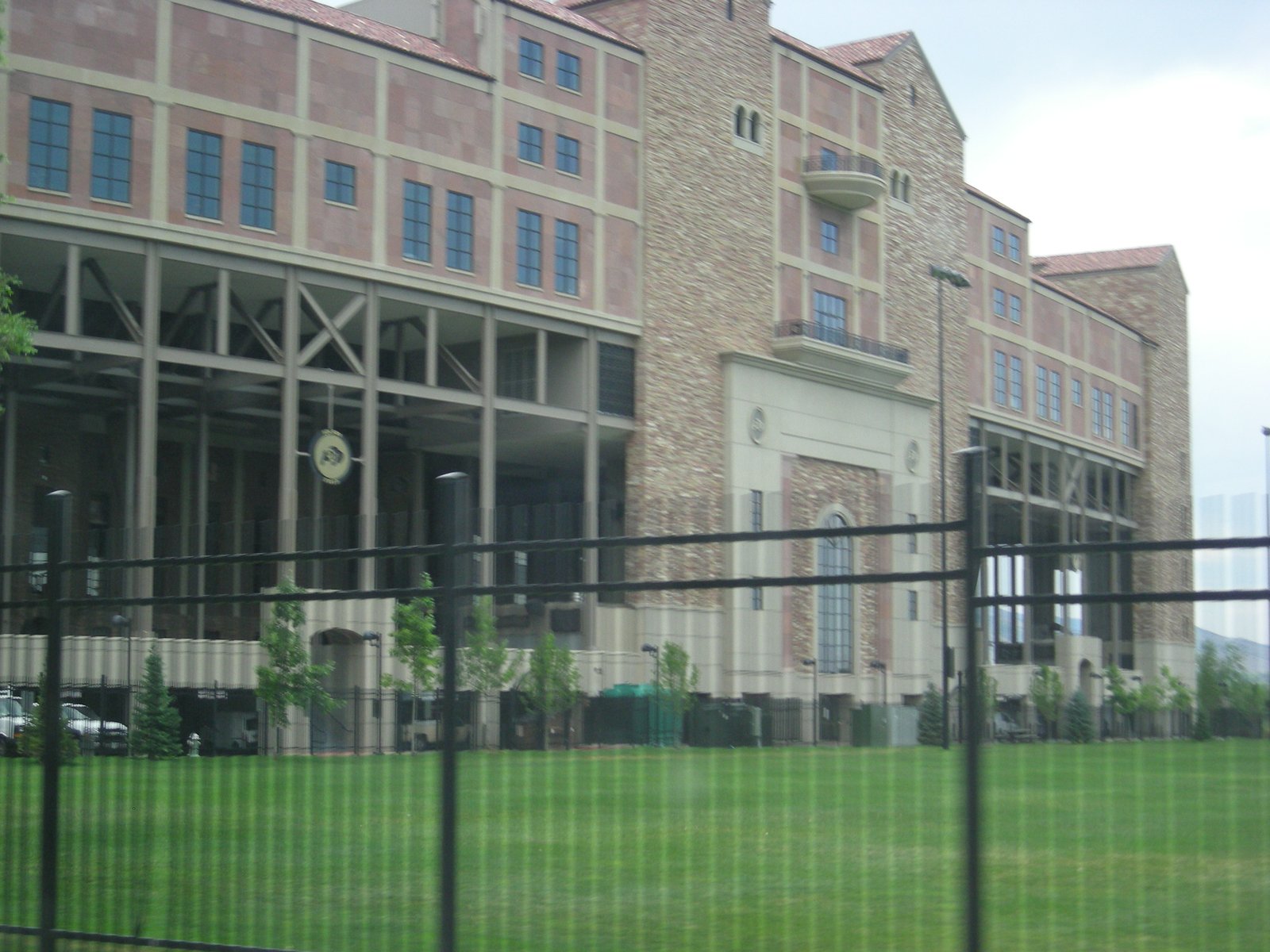
On an ordinary autumn afternoon in Boulder, the brick walkways of the University of Colorado campus usually hum with the familiar rhythms of collegiate life: backpack-toting undergraduates crossing the quad, autumn leaves dusting the foothills of the Flatirons, and marching band brass echoing across practice fields. But when head football coach Deion Sanders walks between the Dal Ward Athletic Center and the practice turf at Folsom Field, the pastoral illusion evaporates. He is flanked by a close-protection detail of private armed bodyguards, off-duty tactical police officers, and plainclothes security personnel sweeping perimeter sightlines.
What once looked to casual observers like the theatrical entourage of a legendary NFL Hall of Famer has now been confirmed as a grim operational necessity.
Five Death Threats Daily in Boulder Police Records
According to declassified incident reports obtained from the City of Boulder Police Department and corroborated by university officials, Sanders lives and works under continuous, around-the-clock armed protection. The investigation logs reveal that Sanders and his immediate family members receive an average of five explicit death threats every single day. The volume and specificity of the messages (delivered through burner social media accounts, encrypted messaging applications, and anonymous voicemails left with athletic department switchboards) have turned one of the most picturesque college towns in America into a fortified security zone.
The documented threats originate from two distinct, toxic cultural currents that have converged upon modern college sports.
The first is the raw, combustible friction of American cultural and racial polarization. When Sanders arrived in Boulder in December 2022, he did not merely take over a moribund football program that had finished 1–11; he staged an uncompromising cultural revolution. Unapologetic in his swagger, deeply faithful in his public rhetoric, and ruthlessly modern in his utilization of the transfer portal and Name, Image, and Likeness (NIL) collectives, Sanders instantly became the most polarizing figure in amateur sports.
For millions of Black supporters and younger fans, his unapologetic refusal to bend to traditional collegiate etiquette was exhilarating. For reactionary segments of the sporting world, his dominance of national television broadcasts and unapologetic elevation of his sons, quarterback Shedeur Sanders and safety Shilo Sanders, provoked bitter resentment. Investigators noted that several dozen intercepted threats contained vile racial slurs, lynching imagery, and explicit promises of physical violence outside team hotel quarters.
The Wrath of the Legalized Sports Bettor
“In an analog era, an angry bettor tore up their slip and cursed at a tavern TV. In 2026, armed with social media handles and dark-web phone dumps, angry gamblers channel financial desperation directly into the palms of coaches.”
Investigative Analysis on Sports Wagering Harassment
Yet the police dossiers reveal an even larger, faster-growing category of intimidation: the wrath of the enraged sports bettor.
Since the US Supreme Court struck down the federal ban on sports wagering in 2018, legal online sports gambling has experienced unchecked commercial expansion, turning millions of smartphones into 24-hour betting kiosks. The NCAA and major television networks enthusiastically partnered with commercial sportsbooks, plastering live point spreads, over-under totals, and player proposition odds across every pregame broadcast and digital ticker.
The consequence of that financial integration has arrived on campus with terrifying velocity. When a college kicker pushes a field goal wide in the fourth quarter, or when Sanders elects to take a knee rather than score a late touchdown to run out the clock, thousands of gamblers who placed hundreds or thousands of dollars on a five-point spread suffer instant financial losses.
In an analog era, an angry bettor tore up their paper slip and cursed at a television in a tavern. In 2026, armed with social media handles, personal mobile numbers circulated on dark-web forums, and algorithmic direct-messaging access, angry bettors channel their financial fury directly into the palms of coaches and amateur athletes.
Boulder police files document repeated messages vowing to execute Sanders’ family members after specific fourth-quarter coaching decisions failed to cover second-half point spreads. One gambler sent detailed surveillance photographs of Sanders’ private residence in Longmont, demanding wire transfers to recoup lost parlay stakes.
Multi-Million-Dollar Private Security Infrastructure
This hostile environment has forced universities to quietly reallocate millions of dollars from athletic budgets into private security infrastructure. Protecting a high-profile football program no longer means hiring a few campus security guards to guide team buses through tailgating traffic.
The University of Colorado, like prominent programs across the SEC and Big Ten, now contracts elite private executive protection firms composed of former federal agents and military special forces veterans. Advance security teams sweep visiting hotels, canine bomb units inspect stadiums prior to kickoff, and cyber-intelligence contractors monitor social media feeds for geolocation metadata and credible threat indicators.
The escalation exposes a profound ethical crisis for collegiate athletics. The NCAA, an organization ostensibly dedicated to student-athlete welfare and academic integrity, has spent the last decade monetizing the emotional intensity of its fanbase while reaping billions from gambling advertising partnerships.
The End of Amateur Inoculation
NCAA President Charlie Baker has repeatedly lobbied state legislatures to outlaw collegiate proposition bets, arguing that individualized wagering creates unbearable harassment for amateur players who receive no institutional security details. Yet Sanders’ daily security reality demonstrates that the commercial genie cannot simply be coaxed back into the bottle. Once sports leagues invite predatory gambling capital into their living rooms, they inevitably inherit the violence that accompanies financial desperation.
The emotional toll of this permanent siege is palpable. Sanders, whose entire public persona is predicated on fearless charisma and impenetrable self-confidence, has had to adjust to a reality where his grandchildren cannot attend public spring practices without armed escorts watching from the stands. Coaches and players are increasingly instructed to disable location services, abandon spontaneous campus interactions, and treat ordinary fan interactions with defensive suspicion.
The romanticized mythology of American college football (the autumn walk across campus, the accessible coach holding court at the local diner, and the open dialogue between athletes and the student body) is rapidly disintegrating. It is being replaced by armored SUVs, tinted glass, and security perimeters.
What to watch next: Whether the Colorado Board of Regents requests state emergency security appropriations to cover escalating athletic protection costs, how federal law enforcement agencies coordinate prosecutions against cross-state gambling extortionists, and whether other major college programs follow Colorado’s lead in disclosing the full scale of threats facing their personnel. Deion Sanders has proven he can build a cultural phenomenon on the football field. The tragic revelation of his daily life is that in modern America, surviving that phenomenon requires armed guards.