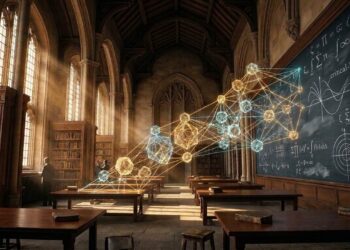






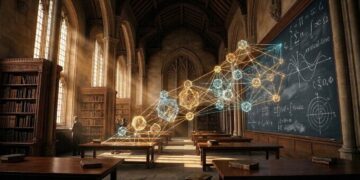
































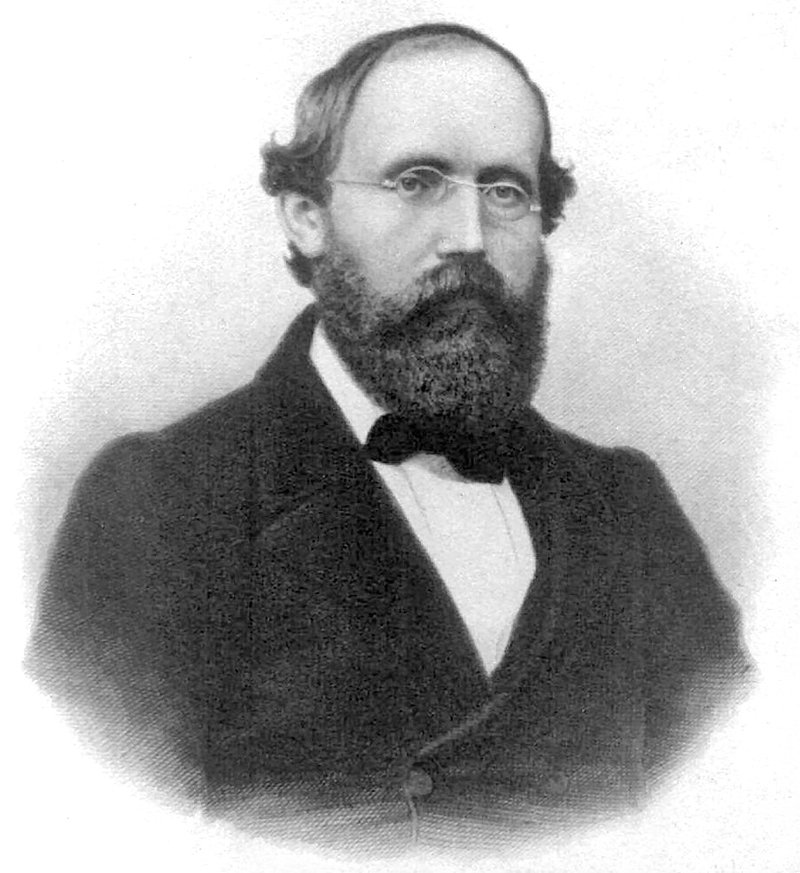
In the rarefied world of pure mathematics, truth is not established through consensus, empirical observation, or persuasive prose. It requires an unbroken chain of airtight logical deductions stretching back to foundational axioms. For 167 years, the most celebrated open challenge in this discipline has been the Riemann Hypothesis, proposed by German mathematician Bernhard Riemann in 1859 concerning the distribution of non-trivial zeros of the zeta function and their intimate connection to prime numbers.
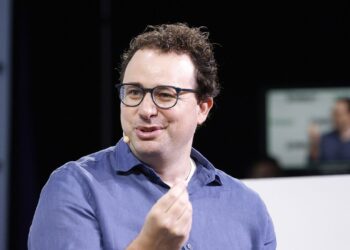
Now, an unprecedented collaboration between frontier artificial intelligence and formal verification software has yielded what leading number theorists describe as a historic milestone. Independent teams of mathematicians from the University of Cambridge and Princeton University have verified preliminary logical steps and auxiliary lemmas formulated by Anthropic’s Claude 3.5 Sonnet within the research framework of mathematician Levent Alpöge. The formal deductions, audited using the interactive theorem prover Lean 4, represent the first time an advanced large language model has successfully produced verified logical scaffolding for an active Millennium Prize research program.
The validation arrives at a critical juncture for the artificial intelligence industry. While public discourse has focused heavily on generative chatbots and corporate enterprise valuations following the shifting capital dynamics surrounding Anthropic’s valuation, academic mathematicians have pursued a far more rigorous benchmark: machine assistance that eliminates hallucinations entirely.
The Semantic Compiler: Why Lean 4 Changes the Equation
Historically, mathematicians viewed large language models with deep skepticism. When asked to evaluate complex mathematical arguments, standard transformer architectures frequently generate fluent, elegant prose that conceals fatal analytical flaws. A model might state plausible intermediate steps, skip delicate boundary conditions, or introduce subtle circular reasoning that requires weeks of human peer review to untangle.
To circumvent that fragility, the Cambridge and Princeton researchers paired Claude 3.5 Sonnet with Lean 4, an open-source interactive theorem prover and functional programming language developed by Leonardo de Moura at Microsoft Research and maintained by the Lean FRO. In this architecture, Lean functions as an unyielding semantic compiler. A proposed proof step cannot be accepted merely because it sounds persuasive; the Lean kernel must verify that every inference adheres strictly to the formal rules of dependent type theory.
When Alpöge explored technical refinements to bounds on prime-counting functions and zero-free regions of the Riemann zeta function, Claude was tasked with translating high-level conceptual sketches into formal Lean syntax and searching for intermediate lemmas. In dozens of instances, Lean rejected initial code drafts due to type mismatches and unproven assumptions. Working in an automated iterative loop, Claude refined its formal tactics until the code successfully compiled without errors.
According to audit records released by the Cambridge research repository, the independent teams verified that four substantial auxiliary lemmas generated through this process were mathematically sound and fully formalized from base axioms. While researchers emphasize that this does not constitute a full proof of the Riemann Hypothesis, the verified lemmas resolve significant technical bottlenecks that had stalled manual progress for years.
The $1 Million Enigma and 160 Years of Stalled Efforts
The magnitude of this achievement stems from the sheer difficulty of Riemann’s conjecture. In May 2000, the Clay Mathematics Institute designated the Riemann Hypothesis as one of the seven Millennium Prize Problems, offering a $1 million bounty for the first verified proof. The hypothesis asserts that all non-trivial zeros of the analytic continuation of the Riemann zeta function have a real part equal to one-half.
If proven true, the conjecture would unlock profound consequences for number theory, immediately confirming precise bounds on the distribution of prime numbers and establishing hundreds of contingent theorems that currently rely on its presumed truth. Over the past century and a half, dozens of the world’s greatest minds, including David Hilbert, G.H. Hardy, and John Nash, attempted to conquer the problem, often describing it as an obsession that consumed entire careers.

The integration of automated formal reasoning into this historic quest signals a fundamental shift in how mathematics is conducted. Rather than replacing human intuition, frontier models act as high-speed cognitive co-processors. Mathematicians supply architectural vision and strategic direction, while models equipped with formal verification tackle the grueling, combinatorial labor of formalizing technical sub-lemmas.
The Broader Race Toward Autonomous Reasoning
The successful verification of Claude’s mathematical steps comes as tech giants pivot from conversational banter toward verifiable, agentic reasoning. In commercial software, companies are racing to automate complex multi-step workflows, as seen in how OpenAI’s Operator is shifting web interactions from static links to autonomous execution. Similarly, consumer gateways are abandoning passive directories, exemplified by Google’s radical redesign of its search homepage to prioritize persistent conversational synthesis.
Yet pure mathematics presents an unforgiving challenge that commercial web agents rarely encounter. In web automation or conversational search, an eighty-five percent accuracy rate can often suffice for daily tasks. In formal number theory, an accuracy rate of 99.9% is equivalent to zero: a single broken inference invalidates the entire mathematical edifice. The ability of Claude to operate within the zero-tolerance constraints of Lean 4 demonstrates that neuro-symbolic workflows, combining statistical neural networks with symbolic proof checkers, provide a credible roadmap toward hallucination-free reasoning.
Academic leaders at Princeton noted that formalization also democratizes mathematical verification. Traditionally, checking a 100-page manuscript for subtle errors required months of dedicated work by an elite circle of specialized referees. With Lean, verification is deterministic and immediate. Once a proof compiles, any mathematician worldwide can inspect the source code and confirm its validity within seconds, without relying on personal authority or reputation.
What Lies Ahead for Machine-Assisted Science
The verification of these intermediate lemmas opens several promising horizons for automated science. Research groups across Europe and the United States are already compiling libraries of formalized mathematics, aiming to digitize entire graduate-level curricula into interactive proof assistants. As frontier models become more adept at parsing Lean syntax, the bottleneck of formalizing modern mathematics will shrink dramatically.
What to watch next: Whether Alpöge’s extended research group can assemble the verified lemmas into a broader peer-reviewed paper, how Anthropic integrates formal feedback mechanisms into future iterations of its Claude model family, and whether competing laboratories at OpenAI, Google DeepMind, and Meta deploy specialized formal reasoning models targeting other unsolved Millennium Prize challenges. The frontier of mathematical discovery is no longer the sole preserve of human chalkboards. The union of artificial intelligence and formal logic has opened a new era of verifiable truth.