


































BRUSSELS: The post-Cold War consensus governing the peaceful utilization of outer space has suffered what Western defense officials describe as an existential breach. At an emergency North Atlantic Council summit convened at NATO headquarters in Brussels, allied defense ministers were formally briefed on classified allied intelligence indicating that the Russian Federation has made significant technical strides toward deploying an orbital anti-satellite system equipped with a nuclear warhead.
In response to the intelligence findings, NATO Secretary General Mark Rutte announced an unprecedented doctrine of multi-domain space deterrence. For the first time in the alliance’s seventy-seven-year history, NATO has explicitly codified that an intentional kinetic, electronic, or electromagnetic attack against allied orbital infrastructure can trigger collective self-defense mechanisms under Article 5 of the Washington Treaty.
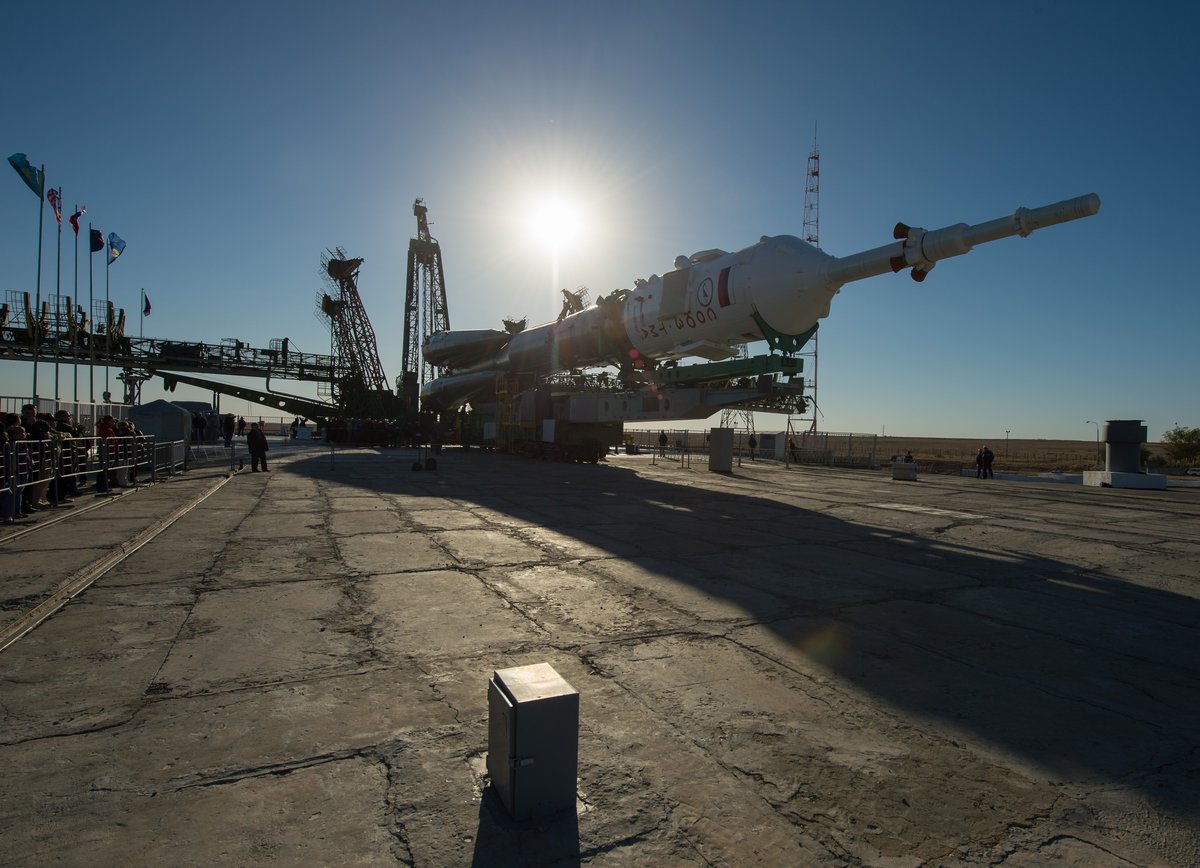
The diplomatic confrontation marks the most dangerous escalation in space militarization since the dawn of the space age. By threatening to position nuclear armaments in permanent terrestrial orbit, Moscow challenges the foundational bedrock of international space law, specifically the 1967 Outer Space Treaty. In doing so, it risks transforming the commons of low Earth orbit into an unnavigable wasteland of lethal radiation and cascading hypervelocity debris.
The Physics of Orbital EMP and Total Space Denial
Military space analysts emphasize that the threat posed by an orbital nuclear device differs fundamentally from terrestrial tactical nuclear arms or conventional anti-satellite missiles. Rather than directing a kinetic interceptor against an individual reconnaissance satellite, a nuclear detonation in low Earth orbit generates a devastating, omnidirectional High-Altitude Electromagnetic Pulse (HEMP).
Simultaneously, the detonation injects dense artificial radiation belts into the magnetosphere. Highly charged relativistic electrons trapped along planetary magnetic field lines would bombard satellite constellations for months or years. Over time, that chronic ionizing radiation degrades photovoltaic arrays and fries internal microelectronics across commercial and sovereign satellites alike, rendering them dead hulks tumbling silently through orbit.
The indiscriminate nature of such a weapon constitutes its most alarming characteristic. Unlike cyber exploits or directed-energy dazzlers that temporarily degrade localized optical payloads, an orbital nuclear blast does not discriminate between a classified Pentagon early-warning constellation and an equatorial meteorological orbiter. Within hours of detonation, hundreds of billions of dollars in commercial satellite capital would be completely annihilated.
The catastrophic vulnerability of civilian infrastructure underscores the fragility of modern communications networks, a systemic reality demonstrated by how national cybersecurity shake-ups follow unexpected infrastructure vulnerabilities and network disruptions. Modern societies have tethered their core functions to orbital signals without fully acknowledging the physical perils threatening those invisible links.
The Collateral Threat to Global Commerce and Civil Navigation
The economic ramifications of wide-scale orbital disruption would be swift and global. The modern financial architecture relies extensively on precision atomic clocks aboard Global Positioning System (GPS) and Galileo satellites to synchronize high-frequency cross-border stock trades, automated banking clearances, and electrical transmission grids. Blinding those constellations would paralyze international capital transfers within minutes.
Civil aviation, maritime cargo shipping, and localized emergency services depend continuously on orbital position, navigation, and timing telemetry. Modern automated container terminals and precision agricultural combines would grind to an abrupt halt, triggering immediate localized food supply disruptions and freezing oceanic shipping corridors.
Furthermore, consumer connectivity platforms that facilitate daily civilian communication are deeply integrated into space-borne routing layers, a trend accelerating as pervasive digital platforms and autonomous software agents expand their ambient presence across user lives. The destruction of low Earth orbit assets would sever rural broadband connections, disrupt cellular mobile backhauls, and blind environmental monitoring sensors monitoring oceanic heat waves and agricultural output.
The prospect of such unilateral destruction highlights the widening crisis of multilateral enforcement. While international legal bodies have struggled to enforce foundational conventions, as seen in the diplomatic difficulties surrounding International Court of Justice rulings and multilateral treaty compliance, the Outer Space Treaty lacks any built-in inspection mechanisms or punitive enforcement clauses, leaving deterrence entirely reliant on military threats.

Brussels Draws a Red Line: Article 5 in the Cosmos
Recognizing that diplomatic protests alone will not deter Moscow, NATO’s emergency communique represents a deliberate strategic gambit. Historically, adversaries operated under the assumption that orbital attacks resided in a gray zone, below the threshold of kinetic war on Earth.
By formally extending Article 5 protections to space assets, NATO seeks to remove that ambiguity. Allied planners calculate that if Moscow believes an anti-satellite detonation will provoke immediate retaliatory strikes against terrestrial command-and-control hubs, naval bases, and radar installations across Russian territory, the strategic utility of an orbital weapon collapses.
The Brussels declaration directly refutes that calculation. Rutte emphasized that allied defense postures will henceforth treat sovereign space hardware as sovereign national territory. An attack on a French Syracuse communications orbiter, an American missile-warning sensor, or a German reconnaissance satellite will be met with a unified, proportional military response spanning all operational domains: maritime, terrestrial, air, cyber, and outer space.
Defense officials in Washington corroborated this stance, revealing that the United States Space Force has accelerated deployment of resilient, proliferated satellite architectures alongside offensive counter-space capabilities designed to neutralize hostile orbital assets before deployment.
What Lies Ahead for the Orbital Arena
The militarization of outer space has ceased to be a theoretical topic reserved for science fiction and academic defense white papers. It is now the central strategic dilemma confronting international policymakers.
Key developments to monitor in the coming months: First, whether Russia proceeds with scheduled heavy-lift aerospace launches from Plesetsk and Baikonur or pauses deployments amid intense Western diplomatic pushback. Second, how non-aligned spacefaring powers, particularly China and India, respond to the prospect of an orbital weapon that threatens their own multi-billion-dollar space programs. And third, whether the United Nations Security Council can muster diplomatic consensus to reaffirm the demilitarization of space, or if the cosmos will succumb to an unconstrained multi-polar arms race.
The high frontier has become the premier flashpoint of contemporary geopolitical competition. In declaring Article 5 operational in Earth orbit, NATO has drawn an unmistakable line across the stars. Whether that line preserves strategic stability or accelerates celestial conflict will define the safety of human civilization for generations to come.