































REDMOND, Washington: For decades, the fundamental architecture of corporate desktop computing has rested on static inter-process communication. Applications ran in bounded user spaces, exchanging data through rigid APIs, clipboard buffers, or localized files. When machine learning entered the enterprise environment, it was largely bolted onto this legacy foundation as isolated chat panes or centralized cloud calls.
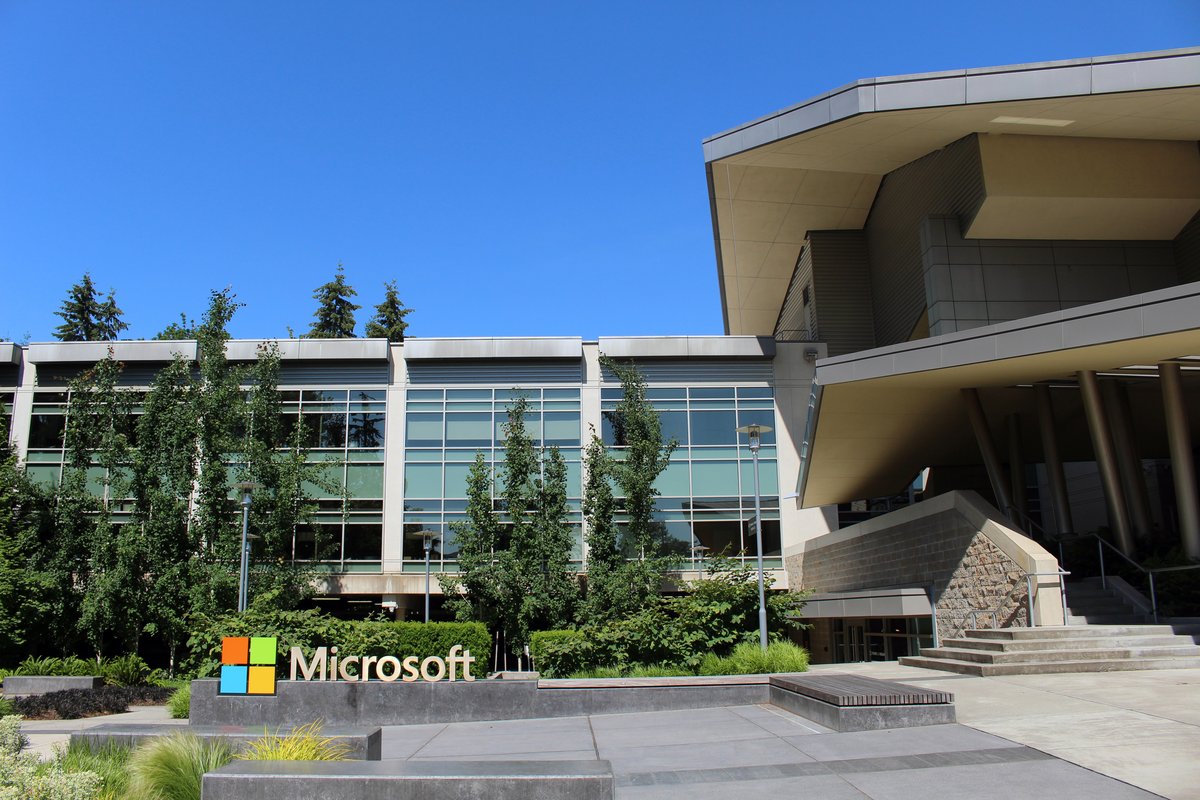
That architectural paradigm has now been fundamentally altered. Microsoft has begun distributing a foundational update to Windows 11 Enterprise and its Azure-managed corporate estates that embeds a decentralized Agent-to-Agent (A2A) mesh protocol directly into the operating system core. Rather than routing automated tasks through remote cloud endpoints or forcing human workers to manually bridge disparate software, Windows 11 now enables background autonomous agents to directly discover, negotiate, and execute complex cross-application workflows natively on the client device.

The initiative represents Satya Nadella’s boldest move yet to cement Windows as the default runtime for autonomous workplace intelligence. By relocating multi-agent orchestration from high-latency cloud servers to local silicon, Microsoft is attempting to solve the twin crises currently stalling enterprise AI deployment: crippling compute overhead and mounting corporate compliance anxieties over private corporate telemetry.
The Anatomy of the Local Neural Bus
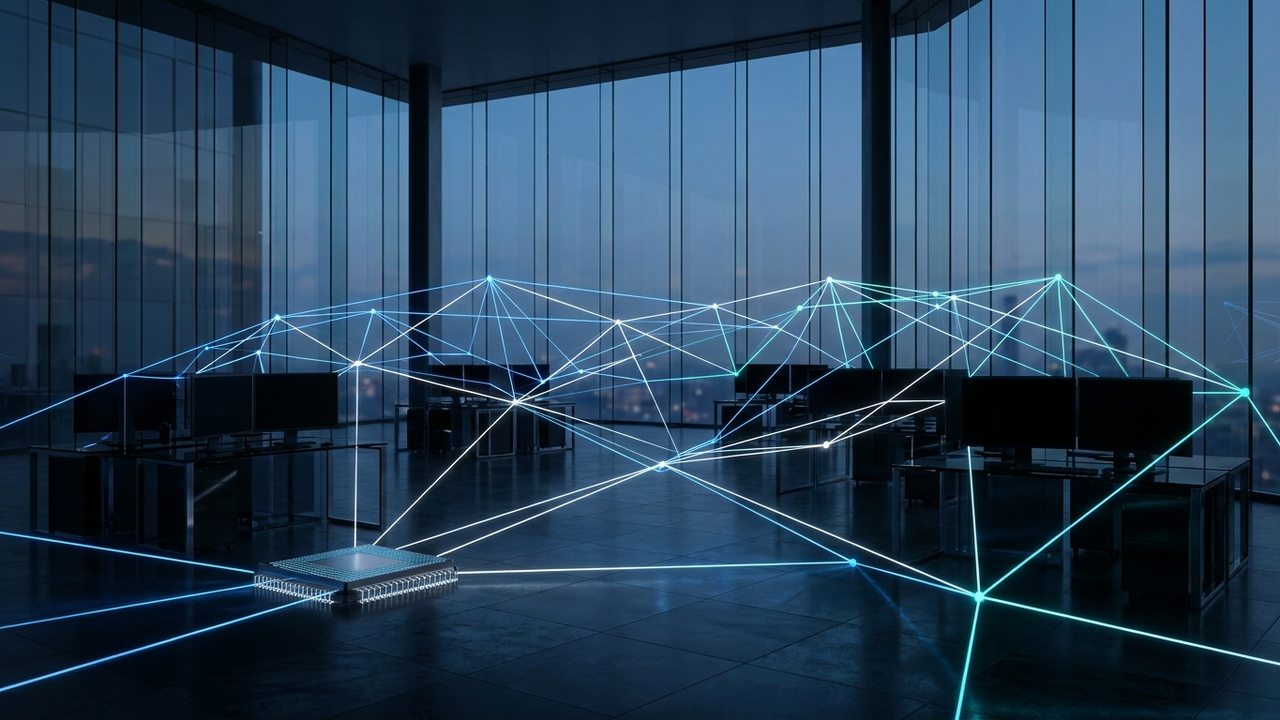
At the center of this release is a low-level operating system service dubbed the Agent Runtime Bus. Historically, running multiple autonomous software delegates required routing every prompt, intermediate reasoning step, and structured output through distant server farms. Under that cloud-tethered framework, an automated workflow involving a CRM agent, an inventory database agent, and an email drafting agent incurred prohibitive API fees and introduced multi-second latency at every turn.
The Windows 11 Enterprise update replaces that clumsy relay with a secure peer-to-peer inter-agent communication channel built on top of Windows Subsystem abstractions. Using cryptographically signed local tokens managed by Windows Defender and Azure Active Directory, agents operating inside certified enterprise software can exchange structured payloads directly in memory without internet round-trips.
Furthermore, the framework capitalizes on the rapid proliferation of neural processing units (NPUs) inside modern enterprise laptops and workstations. By offloading routine intent verification, context routing, and schema validation to on-device silicon capable of 40 to 50 TOPS (trillion operations per second), the operating system handles inter-agent handshakes with sub-10-millisecond latency and zero incremental cloud compute billing.
Early enterprise telemetry from early-access Fortune 500 financial and healthcare institutions indicates dramatic performance gains. In transactional auditing benchmarks, workflows coordinating specialized compliance agents and ledger validation agents completed up to twelve times faster than identical cloud-orchestrated runs, while eliminating outbound data transmission entirely.
Breaking the Cloud Dependency and Solving Sovereignty
The timing of Microsoft’s deployment reflects a broader industry recognition that centralized cloud models face severe economic and legal bottlenecks. Enterprise Chief Information Officers have grown increasingly resistant to licensing pricing structures where every automated employee click or background data check triggers a metered API charge. Moreover, stringent global regulatory frameworks, including the European Union’s GDPR and localized sovereign data mandates, effectively prohibit transmitting unredacted patient records or proprietary trading data across international cloud corridors.
By enforcing local execution for inter-agent context sharing, Microsoft directly resolves these compliance roadblocks. Proprietary enterprise data remains confined to the endpoint’s encrypted local memory. Only when an agent explicitly requires global knowledge retrieval or heavy frontier model fine-tuning does the local mesh initiate an authenticated call to Azure OpenAI Service.
This operational model stands in stark contrast to the dominant architectural philosophies competing across the technology sector.
In the consumer sphere, device-centric approaches are attempting to turn personal hardware into ambient assistants, as seen in the British rollout of Meta’s autonomous agent Muse alongside Yann LeCun’s push for open models. In developer circles, open-source teams have prioritized lightweight, self-contained runtimes, documented by how local sandbox agents like n8n’s NOD tackle desktop automation without cloud relays.
Conversely, proprietary cloud laboratories have wagered heavily on remote virtualization, a trend exemplified by how OpenAI’s Operator is shifting web interactions from static links to autonomous execution. Even the fundamental entry points of global knowledge retrieval are abandoning static links in favor of real-time synthetic synthesis, illustrated by the dramatic redesign of Google Search to replace traditional links with real-time reasoning. Microsoft’s hybrid strategy attempts to bridge these worlds by giving enterprise administrators centralized control while executing operational logic locally.
Industrial Multi-Agent Fleets in Practice
Within enterprise pilot environments, the decentralized mesh enables complex business choreography that was previously impossible without brittle bespoke engineering. In a typical multinational procurement scenario, an autonomous supplier-evaluation agent running in SAP can negotiate delivery schedules directly with a localized logistics agent operating in Microsoft Dynamics.
Rather than routing through an external cloud pipeline, the two agents establish an ephemeral, encrypted pipe across the Windows Agent Runtime Bus. The procurement agent requests inventory availability; the logistics agent cross-checks local shipping manifest databases, applies contractual discount formulas, and returns a verified confirmation payload.
Crucially, this entire multi-step negotiation occurs within seconds on local hardware, creating an immutable audit log formatted for enterprise compliance officers. If an agent attempts to execute an action exceeding its predefined authorization boundaries, such as approving an expenditure beyond a corporate threshold, the Windows kernel intervenes immediately, suspending the process and routing an escalation ticket to human supervisors via Microsoft Entra ID.
Industry analysts emphasize that this capability turns Windows 11 Enterprise into a decentralized fleet coordinator. Instead of human workers serving as manual connective tissue between fragmented corporate web dashboards, the operating system orchestrates specialized digital delegates operating harmoniously beneath the desktop surface.
The Road Ahead for Enterprise Operating Systems
As Microsoft accelerates the global rollout of its Agent-to-Agent mesh, the broader technology industry faces an inflection point. For the past three years, the narrative surrounding artificial intelligence has been dominated by the scale of foundational model parameters and the race to construct gigawatt-scale data centers. Microsoft’s integration of peer-to-peer agent mesh technology into Windows 11 suggests that the next competitive battleground will be fought on client devices and local execution runtime efficiency.
What to monitor in coming quarters: First, whether independent software vendors, from Salesforce to Adobe, adopt Microsoft’s local Agent Runtime Bus specifications or attempt to establish competing proprietary agent bus protocols. Second, how corporate IT departments navigate the unprecedented governance challenge of managing tens of thousands of autonomous background agents negotiating contracts and executing financial transactions across corporate networks. And third, how enterprise competitors like Apple and Google respond as the desktop operating system transforms from a passive application launcher into an active, self-governing multi-agent mesh.
The boundary between human operating systems and synthetic intelligence has dissolved. In Redmond’s vision of the enterprise future, the computer on your desk is no longer just a workstation; it is an autonomous command center running a collaborative synthetic workforce.