

































MANCHESTER, England: Footballing narratives rarely adhere to clean sentimental scripts, but on Tuesday evening at the Etihad Stadium, the beautiful game stages a dramatic confrontation between legendary past achievements and volatile present ambitions. Kevin De Bruyne, the brilliant Belgian playmaker who captained Manchester City through a glorious decade of domestic dominance and continental triumph, steps onto his former home turf wearing the vibrant azure shirt of Italian champions SSC Napoli in a critical UEFA Champions League group encounter.
For the capacity crowd in East Manchester, the sight of De Bruyne emerging from the players’ tunnel as an opposing talisman evokes profound emotional dissonance. Across 382 appearances for City, the midfield maestro registered 102 goals and 170 assists, orchestrating six Premier League crowns and hoisting the coveted Champions League trophy in Istanbul. Yet the sentimentality that inevitably accompanies such reunions has been thoroughly stripped away by the harsh tactical realities confronting both clubs.
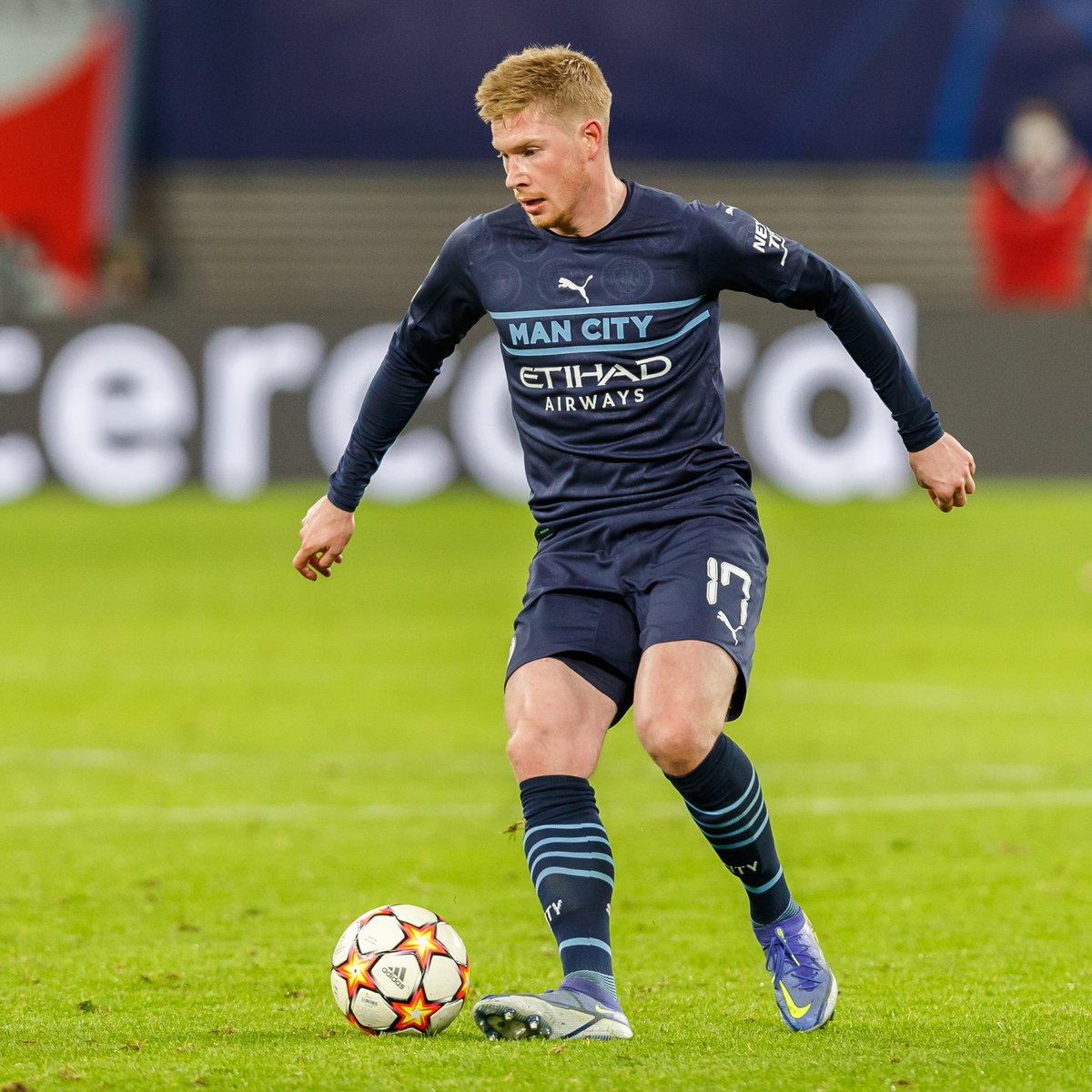
Rather than winding down his decorated career in a low-intensity overseas league, De Bruyne chose a high-stakes tactical gamble by relocating to southern Italy under the fiery stewardship of Antonio Conte. That decision has thrust the veteran playmaker into the epicenter of a grueling tactical reinvention, pitting Conte’s rigid, reactive structural demands against the fluid, possession-dominant instincts that defined De Bruyne’s golden era under Pep Guardiola.
Conte’s Cage versus Guardiola’s Symphony
The early months of De Bruyne’s Italian residency at the Stadio Diego Armando Maradona have proven both electrifying and tactically turbulent. Under Guardiola, De Bruyne operated with supreme spatial autonomy in City’s intricate half-spaces, exploiting the overlapping runs of dynamic full-backs and delivering his trademark curved crosses into the penalty area with mathematical precision.
Conte’s tactical framework demands an entirely different physical and cognitive commitment. Deploying a structured 3-4-2-1 formation, the Italian tactician requires his attacking midfielders to serve as primary defensive triggers, executing aggressive counter-pressing traps, tracking wing-backs into deep defensive thirds, and launching explosive vertical transitions within seconds of winning possession. At thirty-five, managing that intense cardiovascular workload across demanding Serie A and Champions League schedules has pushed De Bruyne’s physical reserves to their limit.
Italian sports dailies have closely documented the growing pains of this adaptation. In domestic clashes against defensive low blocks, De Bruyne’s sublime vision has unlocked stubborn backlines, yielding crucial match-winning assists. However, in high-tempo transitional battles against aggressive pressing sides, lapses in defensive tracking have occasionally drawn public animated lectures from Conte on the touchline.
The obsessive tactical calibration required at this elite level highlights the rigorous scientific preparation dominating modern sport, drawing parallels to how modern managers deploy advanced tactical surveillance, drone tracking, and forensic training methodologies. In modern top-flight football, individual brilliance cannot survive without systemic synchronization.
The Heavy Burden of Partenopei Ambition
For Napoli and their passionate supporters across the Gulf of Naples, signing De Bruyne was a bold statement of intent. The Partenopei have consistently challenged northern Italian giants Juventus, Inter Milan, and AC Milan, but sustaining elite consistency on the continental stage has long proven elusive.
By offering De Bruyne a lucrative multi-year contract, club president Aurelio De Laurentiis signaled that Napoli would not accept domestic mediocrity. The Belgian’s presence has elevated training standards at Castel Volturno and instilled quiet tactical confidence inside a dressing room accustomed to being underdogs on European away trips.
However, carrying the hopes of Naples brings psychological intensity that few players outside the city truly understand. The emotional scrutiny directed at marquee athletes in southern Italy is relentless, mirroring the extraordinary mental pressures and personal exposure experienced by high-profile sporting figures, a dynamic explored in the complex security arrangements and cultural scrutiny surrounding Deion Sanders in collegiate athletics. For De Bruyne, leading Napoli through an intimidating European away night represents the ultimate test of veteran leadership.
The spectacle of European football nights has increasingly merged with global mass entertainment, reflecting how contemporary stadium culture and massive interactive entertainment spectacles captivate global youth audiences. Beneath the bright floodlights of the Etihad, two footballing institutions with vast resources and contrasting identities meet with critical tournament points on the line.
Guardiola’s Transition and Manchester City’s Reality
Across the technical area, Pep Guardiola faces his own tactical calculus. Since De Bruyne’s departure, City has accelerated a systemic transition toward younger, high-pressing midfielders capable of dominating territory through rapid positional rotations. The Catalan manager has restructured his engine room around athletic verticality and rapid counter-pressing to maintain control over defensive transitions.
Yet inside the Manchester City dressing room, De Bruyne’s absence remains palpable in moments when games break open into chaotic end-to-end exchanges. Few midfielders in world football possess De Bruyne’s instinctive capacity to execute a ninety-yard diagonal through-ball that instantly disassembles a compact defensive block. City players privately acknowledge that while their collective pressing numbers have improved, their ability to produce sudden, unscripted attacking breakthroughs has required significant adjustment.
In pre-match press conferences, Guardiola spoke with evident affection for his former captain, acknowledging that De Bruyne’s statue outside the Etihad stands as permanent testament to his contributions. But the City manager was equally blunt regarding Tuesday’s assignment, warning his defenders that giving De Bruyne half a yard of space around the eighteen-yard box would prove fatal.
City’s technical staff has prepared specific tactical traps designed to deny De Bruyne time on the ball, deploying aggressive double-teams to cut off passing lanes into Napoli’s speedy forward line. For City, containing their greatest-ever playmaker is an existential prerequisite for securing top spot in the group phase.
What Lies Ahead on the European Stage
Tuesday’s encounter at the Etihad is far more than a nostalgic testimonial. It is a defining litmus test for two ambitious European football projects operating under relentless public pressure.
Key dynamics to watch during the ninety minutes: First, how the home Manchester crowd greets their former idol when his name echoes across the public address system, and whether De Bruyne will celebrate if he scores against his old club. Second, whether Conte’s defensive block can withstand City’s relentless home pressure without forcing De Bruyne into unsustainable defensive retreats. And third, how the outcome impacts the broader momentum of both clubs as the continental season enters its decisive winter phase.
Legends are forged through historic milestones, but true greatness is proven by embracing formidable challenges when the comfortable path beckons. Under the Manchester rain, Kevin De Bruyne faces the institution he helped build, determined to prove that his footballing genius belongs not to memory, but to the urgent present.