


































CUPERTINO, California: In a calculated move to substantiate its most ambitious privacy claims, Apple has officially begun providing external cybersecurity researchers with authenticated, programmatic access to its Private Cloud Compute (PCC) server infrastructure. The initiative, accompanied by a record-breaking $1 million maximum bug bounty, represents an unprecedented architectural disclosure designed to prove that the company’s generative artificial intelligence platform does not retain user data, expose private telemetry, or allow administrative backdoor surveillance.
The disclosure marks a watershed moment in the commercial deployment of generative technology. While competing cloud hyperscalers have historically treated server-side inference environments as proprietary black boxes, Apple is betting that cryptographic verifiability will become the primary competitive moat separating its Apple Intelligence ecosystem from rivals. Under the new security framework, independent security auditors can inspect the virtual machine images powering PCC, verify cryptographic build hashes against live server nodes, and attempt to compromise production data pipelines in an isolated research environment.
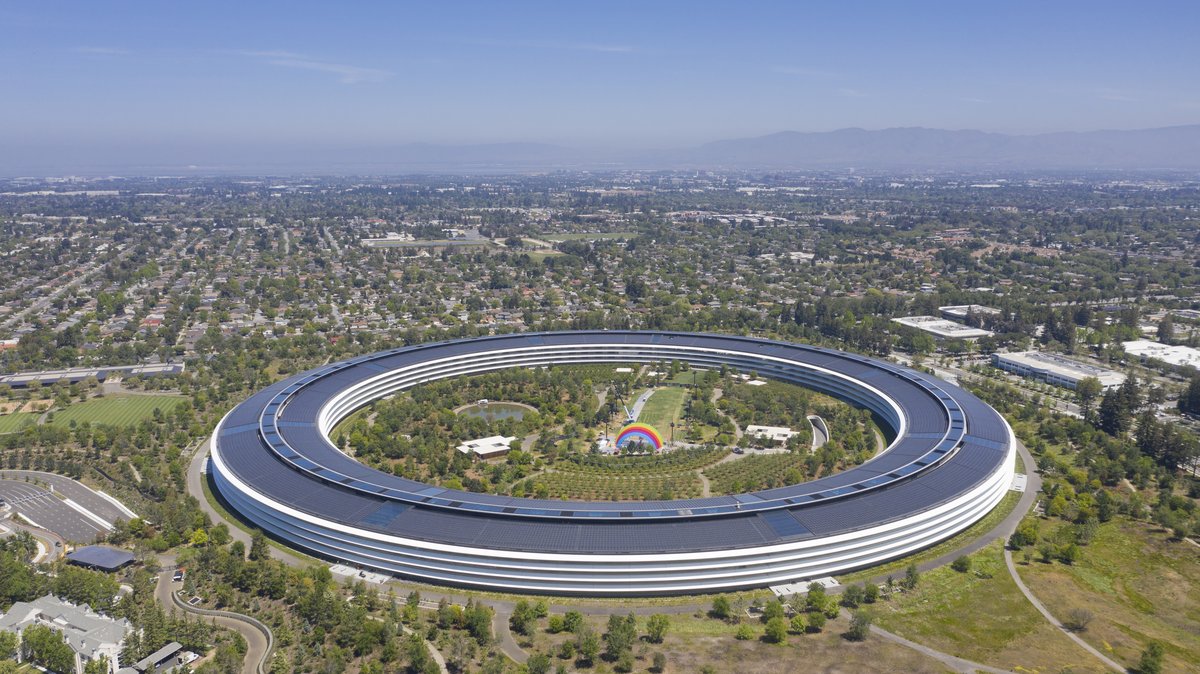
At the physical core of this architecture lies custom server hardware built entirely around high-density Apple Silicon. Deploying server racks powered by M4 and M4 Max silicon nodes operating inside specialized data center facilities, Apple has engineered an operating system environment that strips away standard system administration interfaces, persistent storage volumes, and remote management daemons, establishing a mathematically verifiable hardware boundary between cloud intelligence and user privacy.
The Cryptographic Guarantee: Stateless Execution at Scale
The technical foundation of Private Cloud Compute rests on a security philosophy termed stateless execution. In traditional cloud artificial intelligence deployments, user prompts, contextual metadata, and operational outputs pass through shared servers, where intermediate activations can reside in temporary swap files, application logs, or diagnostic memory buffers. While enterprise cloud providers enforce software-level access controls, those boundaries remain vulnerable to hypervisor-level privilege escalation, misconfigured storage buckets, or insider coercion.
Apple’s architecture circumvents that vulnerability through cryptographic attestation. Before an iPhone, iPad, or Mac transmits an complex reasoning prompt that exceeds on-device neural engine capacity, the local device initiates a secure hardware handshake with the PCC cluster. The client hardware verifies that the destination server node is running an unmodified, cryptographically signed operating system image whose binary hash corresponds exactly to publicly audited release records.
Before transmitting sensitive payloads across the network, the user’s device demands undeniable mathematical proof that the cloud node cannot persist or inspect data. If the server’s cryptographic measurement deviates by a single byte, indicating unauthorized debugging code, an unverified kernel patch, or an intercepting proxy, the client abruptly terminates the connection, refusing to transmit user data.
Once an authorized node processes the request, the architecture enforces strict non-retention. Memory states are scrubbed immediately upon inference completion, encryption keys are derived ephemerally and discarded, and the physical servers possess no local persistent hard drives or external storage mounts where data could be retained. Even under physical seizure or judicial subpoena, an operational PCC node retains zero historical user records.
Security engineers note that this design solves the principal vulnerability plaguing enterprise cloud computing: the human administrator. PCC nodes feature no remote terminal access, no SSH protocols, no administrative passwords, and no interactive diagnostic shell. Apple’s own site reliability engineers cannot log into a running node to monitor active memory buffers or redirect network traffic, eliminating the threat of rogue insider compromise.
A $1 Million Incentive to Break the Black Box
To convince a skeptical cybersecurity community that its privacy claims are more than marketing rhetoric, Apple has released a comprehensive Security Research Device virtual environment. Researchers can run the exact PCC operating system builds on their own hardware, inspect the source code of foundational security daemons, and simulate sophisticated side-channel attacks against isolated virtual memory spaces.
The company backed this transparency with the most lucrative bug bounty structure in consumer technology history. Apple announced bounties up to $100,000 for accidental data disclosure vulnerabilities resulting from system bugs, $250,000 for attacks capable of compromising user data from an external vantage point without physical access, and a maximum prize of $1,000,000 for arbitrary code execution exploits capable of executing unauthorized payloads inside the PCC secure enclave with root privileges.
By offering financial incentives of this magnitude, Apple is setting an aggressive precedent that challenges the opaque operational norms of the artificial intelligence sector. While competitors claim that user prompts are protected by strict corporate data-handling policies, Apple contends that commercial policy guarantees are fundamentally inferior to verifiable mathematical proof.
This architectural contrast is reshaping enterprise computing debates. Organizations are evaluating alternative paradigms, comparing Apple’s sealed hardware boundaries against decentralized architectures such as Microsoft’s deployment of a localized agentic communication mesh embedded directly inside the Windows operating system. Simultaneously, consumer tech platforms are experimenting with ambient on-device delegate models, visible in the British testing of Meta’s autonomous agent Muse alongside public defenses of open weights.
Furthermore, the vulnerability surface of automated computing is expanding rapidly as commercial vendors deploy browser-based autonomous agents, an operational trend illustrated by the enterprise demand and security safeguards surrounding OpenAI’s Operator agent. In an environment where autonomous digital agents interact directly with banking records, medical profiles, and corporate intellectual property, verifiable hardware isolation has become a prerequisite for enterprise viability.
The Broader Implications for Cloud Privacy Standards
The opening of Private Cloud Compute arrives at a delicate moment for global regulatory compliance. In the European Union, data protection authorities enforcing the General Data Protection Regulation and the emerging European AI Act have grown increasingly skeptical of multinational cloud models that transmit consumer biometric and conversational data to remote facilities.
Under conventional cloud service agreements, data transmitted to remote server farms is legally considered to be in the custody of the cloud operator, exposing it to broad discovery requests and international surveillance treaties. By engineering a system where data custody is technically impossible due to stateless cryptographic annihilation, Apple aims to establish a legal distinction between mere computational routing and data possession.
Such a distinction would grant Apple a tremendous competitive advantage among privacy-sensitive enterprise clients, legal firms, healthcare institutions, and government contractors. If compliance officers can certify that cloud-assisted reasoning meets the same regulatory threshold as local on-device computation, Apple Intelligence could overcome enterprise deployment barriers that continue to paralyze competing platforms.
What Lies Ahead for Apple’s Security Posture
The true validation of Apple’s engineering will depend on how the global research community responds over the coming six months. Black-box security claims frequently disintegrate when subjected to aggressive, weaponized scrutiny by elite academic cryptographers and vulnerability brokers.
Key dynamics to monitor in coming quarters: First, whether independent cybersecurity researchers identify subtle architectural vulnerabilities in the virtual machine hypervisor or memory isolation controllers that force Apple to pay out top-tier bounties. Second, how competing hyperscalers like Google Cloud and Amazon Web Services react, and whether customer demand forces them to construct comparable client-verifiable confidential computing enclaves for artificial intelligence workloads. And third, how seamlessly Apple balances ultra-stringent security verification against consumer latency expectations as multimodal features roll out globally.
By opening its server nodes to global scrutiny and staking $1 million on the outcome, Apple has made a definitive statement: in the age of generative intelligence, privacy is no longer a corporate promise on a website; it is an auditable cryptographic contract written into silicon.