


































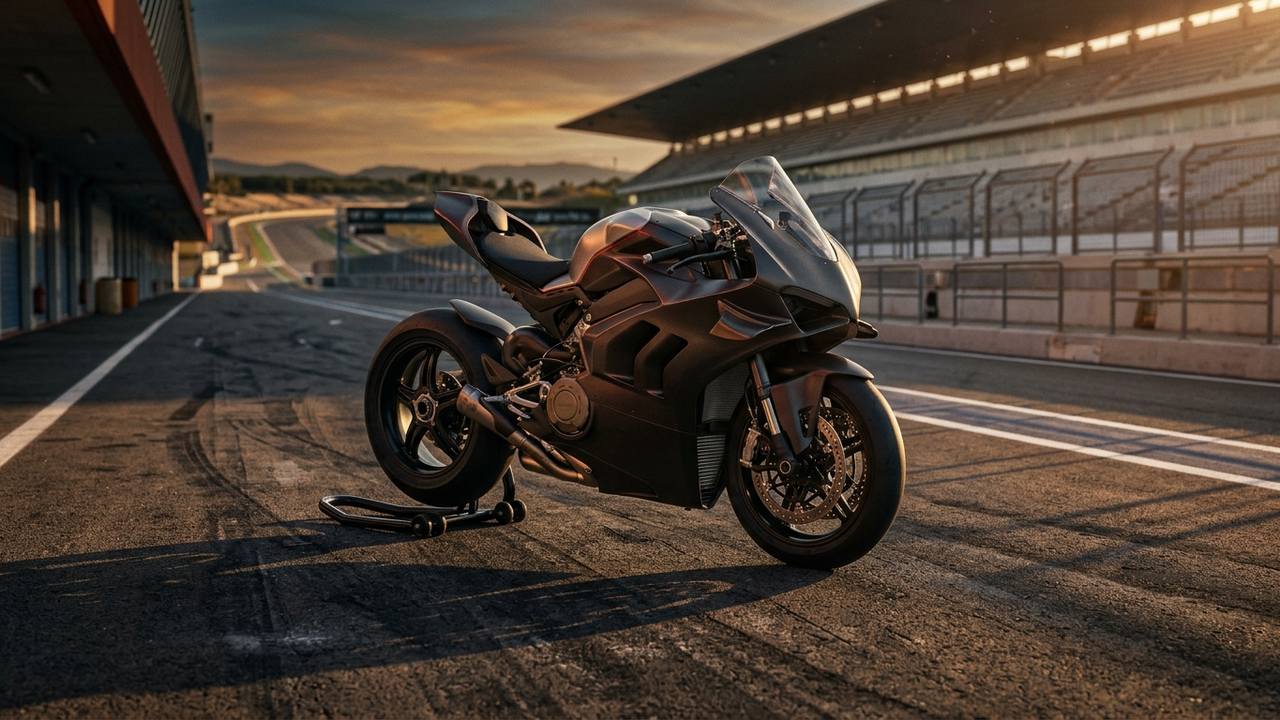
The grandstands of the Circuit Ricardo Tormo in Valencia fell into stunned silence on Friday afternoon as the most electrifying motorcycle racer of the twenty-first century prepared to say goodbye. Standing before an emotional press conference room packed with team personnel, fellow riders, and international journalists, nine-time world champion Marc Márquez dropped an unexpected bombshell on the motorsport world: the season-ending Valencian Grand Prix will be his final professional race.
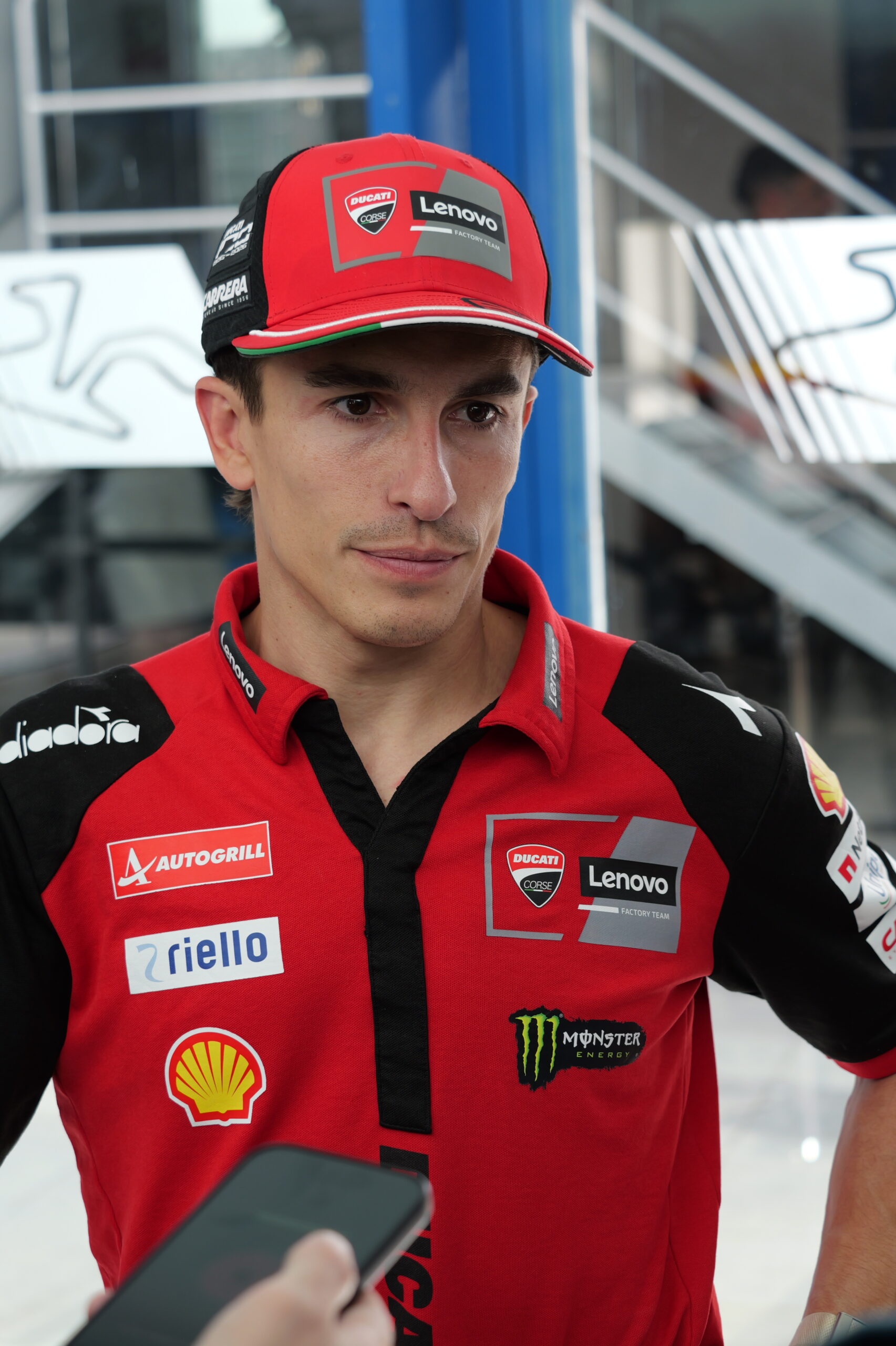
At 33 years of age, the Catalan superstar is walking away at the absolute zenith of his competitive powers. Riding for the factory Ducati Lenovo Team, Márquez proved throughout the 2026 campaign that his raw speed, blistering qualifying pace, and ferocious racecraft remained fully intact. Yet by electing to unilaterally terminate his contractual agreement with Ducati Corse, which extended through the end of 2028, Márquez chose to listen to his battered body rather than corporate commitments, concluding a record-breaking career on his own unyielding terms.
The Hidden Agony Behind the Helmet
The catalyst for this sudden departure lies in the unforgiving physical ledger of modern Grand Prix motorcycle racing. While television broadcasts capture the fluid poetry of a prototype motorcycle leaning past sixty-five degrees at two hundred miles per hour, the reality inside Márquez’s leather suit has been a relentless battle against chronic physical deterioration.
“Wrestling a three-hundred-horsepower machine across twenty-two international race weekends demanded severe anti-inflammatory regimens and constant rehabilitation. With my legacy immortalized, the desire to enjoy a healthy life away from the paddock outweighed the pursuit of additional silverware.”
Marc Márquez, Nine-Time World Champion
Ever since his catastrophic crash at the opening round in Jerez in July 2020, where a fractured right humerus ignited an agonizing saga of four major surgeries, bone osteotomies, and chronic shoulder instability, Márquez has lived under constant medical supervision. Although groundbreaking surgery in Minnesota in 2022 restored his arm mobility and allowed him to capture thrilling victories aboard the Desmosedici, the permanent physiological toll proved irreversible.
Speaking candidly to reporters, Márquez explained that the daily routine required to prepare his upper body for the violent braking zones of modern prototypes had become unsustainable. Wrestling a three-hundred-horsepower machine across twenty-two international race weekends each season demanded severe anti-inflammatory regimens and constant rehabilitation. With his legacy immortalized in championship gold, the desire to enjoy a healthy life away from the paddock outweighed the pursuit of additional silverware.
The 2027 Technical Reset
The timing of the announcement also intersects with the biggest regulatory revolution in modern motorcycle racing. Ahead of the 2027 championship season, the Fédération Internationale de Motocyclisme (FIM) and commercial rights holder Dorna Sports are enforcing a total technical overhaul. Engine displacement will drop from 1,000cc to 850cc, ride-height and holeshot devices will be outlawed, and aerodynamic fairing dimensions will be dramatically curtailed.
Developing an entirely new generation of prototype machinery requires exhaustive winter testing schedules, relentless telemetry evaluation, and endless track development. For Ducati Corse, committing to an aging rider dealing with chronic nerve fatigue presented operational dilemmas. By announcing his departure now, Márquez grants Borgo Panigale engineers full freedom to build their 2027 developmental program around a younger generation of racers.
The psychological demands of competing at this rarefied level mirror the intense pressures found across high-stakes international athletics. The solitary burden shoulder-to-shoulder competition imposes on elite individual performers is universal, sharing profound parallels with how veteran icons navigate high-profile team reunions and severe tactical demands while defending hard-won dominance. When an athlete reaches the summit, the mental discipline required to sustain perfection often becomes heavier than the physical exertion itself.
Tributes from Paddock Rivals
Within minutes of the announcement, heartfelt tributes flooded the Valencia paddock, cutting across old tribal divisions that defined two decades of racing.
Even long-standing rivalries softened in recognition of historic greatness. Former adversary Valentino Rossi issued a gracious public statement praising Márquez as a generational force whose extraordinary aggression elevated the athletic standards of the entire grid. Factory teammate Francesco Bagnaia acknowledged the masterclass of sharing a garage with the Spaniard, while reigning world title contender Jorge Martín expressed profound admiration for Márquez’s fearless front-end saves.
The intensity of these championship battles captures the fierce drama characteristic of elite sports competition. The unrelenting focus required to conquer a Grand Prix weekend echoes the tactical concentration witnessed when continental giants clash under immense tactical scrutiny in European knockout fixtures, where a split-second hesitation spells heartbreak. Similarly, the pressure cooker of tournament brackets, such as teams battling through intense holiday elimination formats in pursuit of championships, reflects the razor-thin margin separating triumph from disaster in professional sports.
The Seismic Shock at Ducati Corse
Behind the scenes at Borgo Panigale, the retirement creates an unprecedented vacancy. Under General Manager Gigi Dall’Igna, the factory team spent significant political and financial capital to bring Márquez into the official garage. His departure instantly opens the most coveted seat in two-wheel motorsport.
The scramble for the factory red seat for 2027 has begun in earnest. Rising phenom Pedro Acosta, currently showcasing breathtaking skill on Austrian machinery, immediately emerges as the premier candidate for the Italian manufacturer. Other potential suitors include Pramac standout Franco Morbidelli and Moto2 phenom Fermín Aldeguer, each eager to pilot the class-leading Desmosedici.
Dall’Igna praised Márquez’s professionalism, thanking him for delivering exceptional technical feedback that refined Ducati’s corner-entry stability. The Italian engineer noted that while losing a legend stings, the data Márquez provided will influence prototype development for years to come.
The Legacy of the Cervera Ant
When Marc Márquez entered the premier class in 2013 as a smiling rookie from Cervera, he fundamentally revolutionized the physics of motorcycle road racing. By hanging his body off the chassis, dragging elbows across asphalt curbing, and pioneering the art of front-wheel tuck recoveries with knee leverage, he redefined what was considered possible on two wheels.
His statistics stand among the gods of motorsport: eighty-eight Grand Prix victories, one hundred and forty podiums, and nine world titles across all classes. Yet numbers fail to capture the sheer, breathless spectacle of his riding. He was a gladiator who refused to acknowledge the boundary between control and catastrophe.
As the sunset bathes the Valencian tarmac on Sunday afternoon, motorcycle racing will bid farewell to its greatest showman. Marc Márquez walked into the paddock as a fearless teenager, conquered the world with unmatched fury, survived devastating injuries with heroic fortitude, and now departs on his own terms, unbroken, unbowed, and forever immortal.