





































At seventy-seven years of age, Bernard Arnault is orchestrating the most consequential corporate succession in modern European business history. The French billionaire, whose acquisitions over four decades assembled LVMH Moët Hennessy Louis Vuitton into an empire valued at more than four hundred billion dollars, has spent recent months quietly reconfiguring the legal and managerial architecture of his family holdings. Behind the gilded facades of Avenue Montaigne and the Place Vendôme, a sophisticated maneuvering contest has intensified among his five adult children, each occupying strategic operational perches across the world’s largest luxury conglomerate.
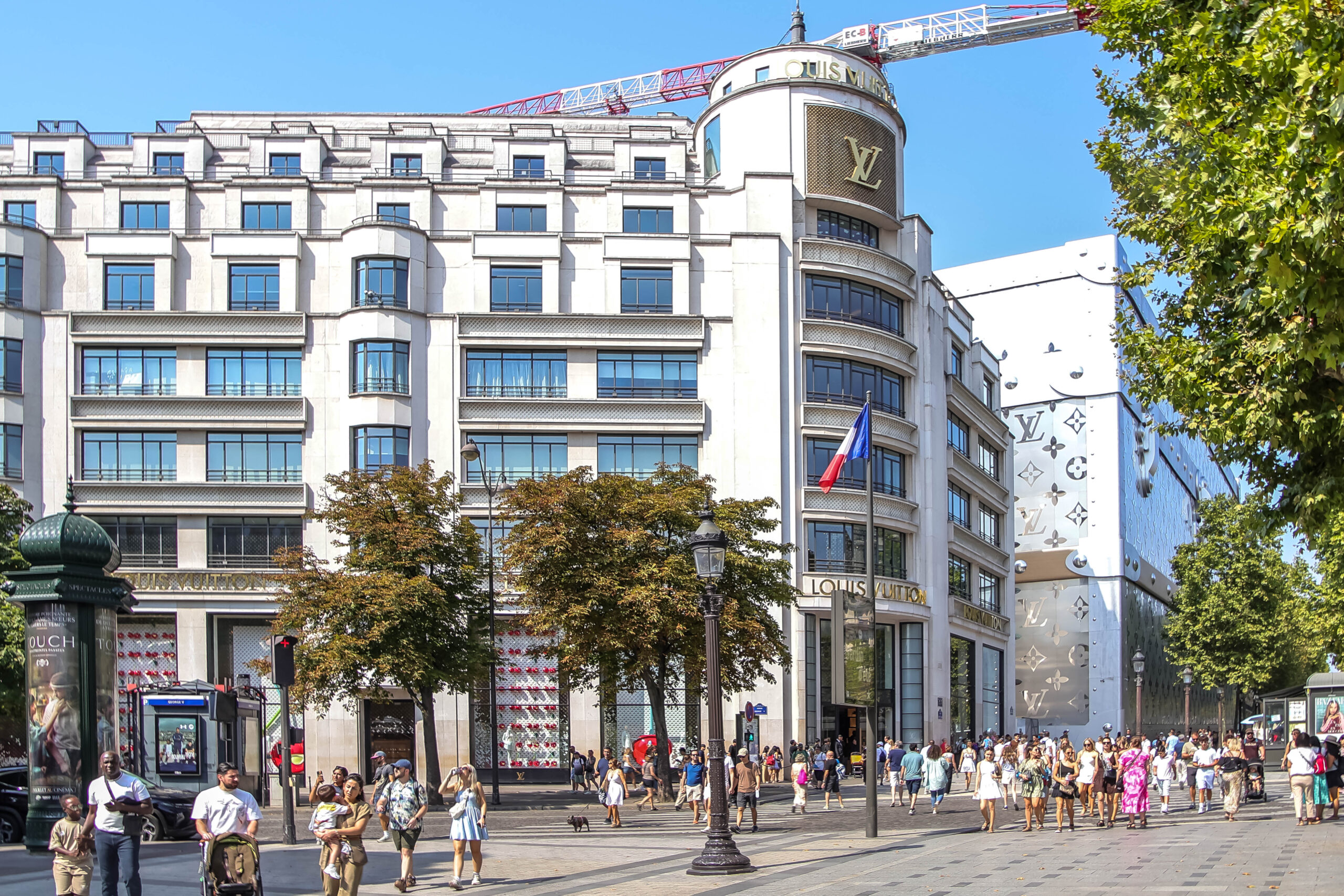
The stakes extend far beyond personal inheritance. LVMH encompasses seventy-five historic fashion, leather, jewelry, wine, and spirits houses, employing over two hundred thousand people and serving as a central pillar of the CAC 40 index in Paris. For international financiers, sovereign wealth funds, and private wealth managers, the smooth transition of power within the Arnault family represents a major governance test. Family-run dynasties frequently unravel upon the departure of their founding patriarchs, succumbing to bitter factional infighting, divergent commercial visions, or asset liquidations that destroy shareholder value.
“Family ownership provides the multi-decade horizon necessary to preserve artistic prestige and artisanal excellence without surrendering to short-term quarterly market pressures.”
Financière Agache Governance Doctrine
To insulate his life’s work against such vulnerability, Arnault restructured Financière Agache, the ultimate holding company that commands controlling voting rights in LVMH. Under a carefully designed corporate framework converted into a limited joint-stock partnership, control of the family holding is divided into equal twenty percent parcels among his five children: Delphine, Antoine, Alexandre, Frédéric, and Jean. Yet while voting shares are distributed equitably on paper, operational authority remains an ongoing, fiercely contested arena.
The Five Contenders on the Luxury Board
Each of the five heirs brings distinct qualifications, generational perspectives, and internal alliances to the succession sweepstakes. The eldest, Delphine Arnault, fifty-one, serves as Chairman and Chief Executive Officer of Christian Dior Couture, historically regarded as the sentimental and commercial launchpad of the conglomerate. Long considered the steady operational disciplinarian within the family, she sits on both the LVMH board of directors and its executive committee, commanding deep respect among institutional investors.
Her full brother, Antoine Arnault, forty-nine, oversees image, communication, and environmental strategy for LVMH while chairing luxury shoemaker Berluti and serving as chief executive of Christian Dior SE. Known as the charismatic public voice of the group, Antoine has cultivated relationships across French political and cultural spheres, often functioning as the family’s diplomatic ambassador to government ministries and civic foundations.
From Arnault’s second marriage to Canadian concert pianist Hélène Mercier come the three younger sons, whose rapid ascents have introduced intense competitive energy into corporate deliberations. Alexandre Arnault, thirty-four, earned acclaim for revitalizing German luggage manufacturer Rimowa before taking over executive operational duties at Tiffany and Co., where he orchestrated high-profile collaborations with contemporary artists and pop icons to attract younger consumers.
Frédéric Arnault, thirty-one, a graduate of the elite École Polytechnique like his father, served as chief executive of TAG Heuer before being elevated to oversee LVMH’s entire watch division and assuming managing directorship at Financière Agache. The youngest sibling, Jean Arnault, twenty-eight, holds advanced degrees in mechanical engineering and financial mathematics, directing Louis Vuitton’s watch development division and driving technical innovation in horology.
How We Got Here: From the Cashmere Takeovers to Legal Fortress
The origins of this generational transfer trace back to Bernard Arnault’s initial conquest of French corporate commerce in the 1980s. Trained as an engineer, Arnault utilized his family’s construction capital to acquire the bankrupt textile conglomerate Boussac in 1984, which owned a dormant haute couture house named Christian Dior. Recognizing the latent pricing power of heritage European craftsmanship, he shed non-core industrial operations and embarked on a series of bold takeovers that surprised the established French business elite.
In 1989, Arnault exploited a bitter rift between the heads of Louis Vuitton and Moët Hennessy to seize controlling equity in their newly merged enterprise. Over the subsequent three decades, he systematically snapped up Fendi, Bulgari, Givenchy, Celine, Sephora, and Tiffany and Co., assembling an unmatched portfolio of luxury monopolies. Throughout this relentless expansion, Arnault maintained that family ownership provided the multi-decade horizon necessary to preserve artistic prestige without surrendering to short-term quarterly market pressures.
To guarantee that his children would maintain unified control after his eventual retirement, Arnault persuaded the LVMH board in 2022 to lift the statutory age ceiling for the chief executive role from seventy-five to eighty, and later adjusted holding bylaws to allow his tenure to stretch toward eighty-five if required. By embedding his offspring into direct operating roles from their twenties, the patriarch created an internal laboratory where performance could be evaluated under direct supervisory pressure.
Macroeconomic Crosscurrents and Market Friction
The succession maneuver unfolds against the most challenging macroeconomic background the luxury sector has confronted in more than a decade. The post-pandemic spending euphoria that drove LVMH shares to record valuations has dissipated. In mainland China, where booming consumer wealth previously generated massive operating profits for European fashion houses, an ongoing real estate downturn and declining consumer confidence have severely dampened discretionary appetite for high-end leather goods and vintage champagne.
Compounding Asian headwinds are rising geopolitical frictions and the threat of aggressive western tariff policies. Transatlantic trade disputes pose direct risks to European luxury exports, threatening punitive levies on French leather accessories, cosmetics, and fine spirits bound for North American department stores.
As equity analysts scrutinize broader retail volatility, reflected in Wall Street assessments of shifting consumer spending and automated shopping bots, the luxury sector confronts an unprecedented test of resilience. While mass retailers suffer systemic distress as evidenced by Poundland entering administration amid collapsing consumer discretionary margins, high luxury purveyors historically operated with pricing immunity. However, persistent global inflation and shifting youth tastes are beginning to erode that structural premium.
Dynasty Governance in a Changing France
The legal fortress constructed inside Financière Agache stipulates that none of the five children may sell their holding company shares for thirty years without unanimous approval from all siblings. Furthermore, only direct descendants of Bernard Arnault are permitted to hold voting equities in the partnership. This mechanism is designed to prevent external activist hedge funds or corporate competitors from prying open the family trust.
This corporate maneuvering unfolds across a sensitive domestic cultural climate where prominent French figures face intensified public accountability, a shift seen as celebrated cultural icons confront rigorous judicial proceedings in Paris, altering the traditional discretion surrounding the nation’s elite institutions. In an era where extreme wealth concentration attracts rising public scrutiny and wealth taxation debates occupy the National Assembly, the Arnault family must manage its public stature with exceptional prudence.
For now, Bernard Arnault retains total executive control, presiding over weekly family lunches at group headquarters where operational results and brand strategies are rigorously dissected. Yet as his five heirs continue to steer their respective divisions through turbulent market waters, the central question looming over Paris and Wall Street remains unanswered: when the patriarch finally steps down, will the five siblings govern as a disciplined collective board, or will the desire for singular control fracture France’s most celebrated business empire?