




































Walking into an ordinary supermarket to buy milk, bread, and evening groceries should be one of the most mundane rituals of modern urban life. For thirty-two-year-old administrative clerk Sara Davies, a routine visit to a Sainsbury’s superstore in South London turned into a humiliating public interrogation that left her socially alienated, emotionally traumatized, and fighting to clear her name. As she stepped past the automatic entry gates, high-definition optical sensors linked to an artificial intelligence facial recognition system scanned her face, matched her biometric profile against a private retail watchlist, and flashed an urgent alert to the security control desk.
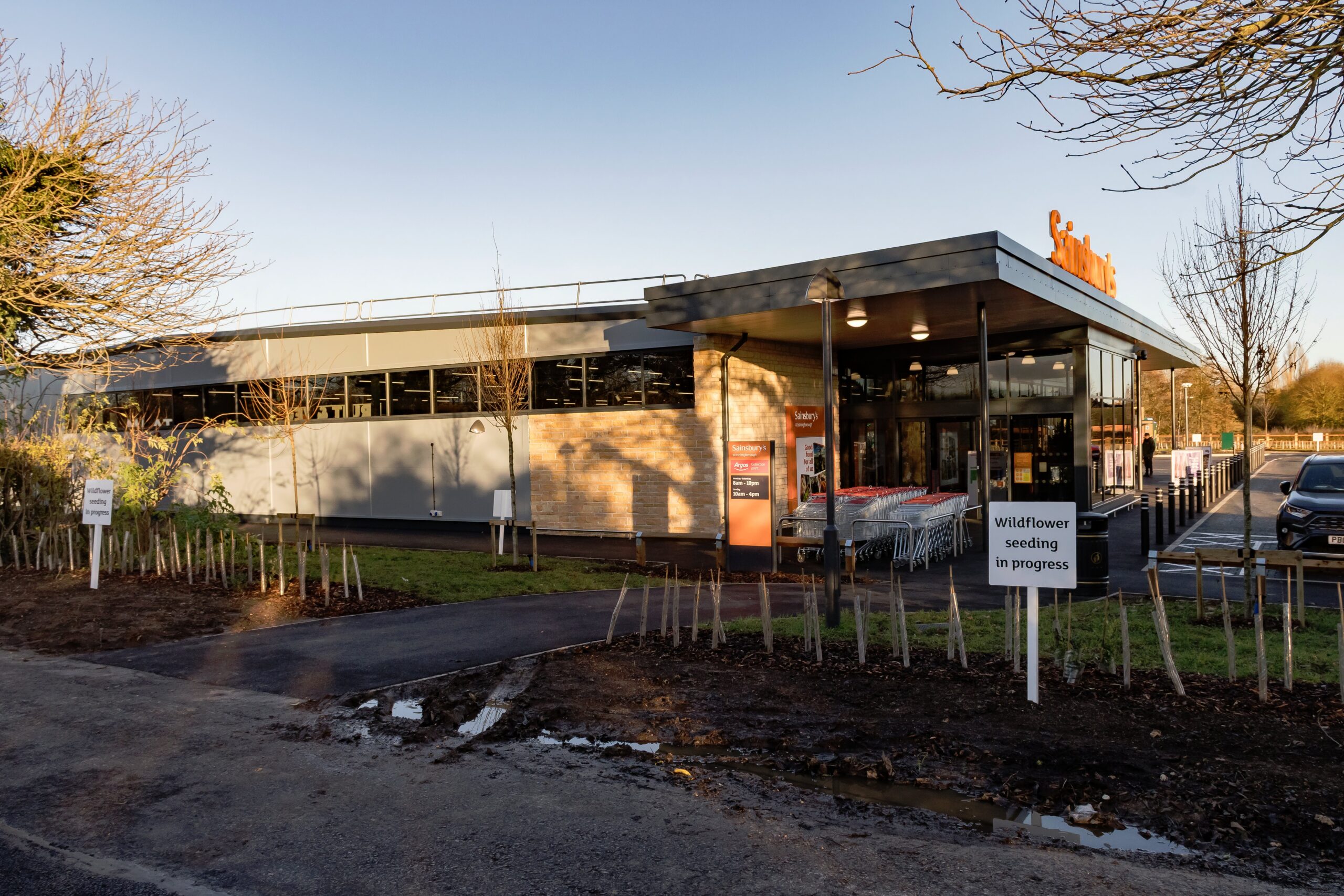
Seconds later, while browsing the fresh produce section, Davies was flanked by two uniformed security guards. In full view of dozens of neighborhood shoppers, they accused her of being a prolific shoplifter who had previously stolen luxury cosmetics and alcohol from another branch across town. Despite her frantic protests, offers to display identification, and clean criminal record, staff escorted her from the premises, handed her an official exclusion notice banning her from every Sainsbury’s store nationwide, and warned that returning would result in immediate police arrest for criminal trespass.
“When algorithms dictate whether a person is permitted to step inside their neighborhood market, the presumption of innocence is quietly surrendered to private software code.”
High Court Civil Liberties Submission
The accusation was entirely false. Davies had never set foot in the offending store, possessed no criminal convictions, and bore only a passing resemblance to the suspect recorded on the retail crime database. Now, backed by civil liberties advocates, Davies has filed a landmark legal action in the High Court against Sainsbury’s and commercial biometrics provider Facewatch, alleging unlawful processing of biometric data, defamation, false imprisonment, and severe psychological distress. The case has ignited a national conversation regarding the aggressive privatization of mass surveillance across everyday British retail spaces.
The Rise of the Algorithmic Watchtower
The ordeal suffered by Davies is neither isolated nor accidental. Over the past four years, British retail conglomerates have poured tens of millions of pounds into automated loss-prevention technologies, responding to sharp rises in retail theft, organized shoplifting rings, and staff abuse. Seeking cost-effective alternatives to dedicated security personnel, major supermarket chains turned to third-party artificial intelligence platforms that promise real-time deterrence through facial biometrics.
Companies like Facewatch equip retail storefronts with specialized cameras that capture the facial geometry of every customer crossing the threshold. Proprietary machine-learning algorithms measure dozens of nodal points across the human face, converting facial structures into mathematical vector maps. These digital vectors are instantly cross-referenced against proprietary centralized databases containing images of individuals flagged as persons of interest by store managers, security guards, or local police bulletins.
When a positive correlation exceeds a predetermined statistical confidence threshold, the software dispatches an automated alert to security guards via mobile handsets or smartwatches, displaying the individual’s photograph, past incident notes, and recommended countermeasures. In theory, human security guards are supposed to independently verify matches before confronting suspects. In practice, as the Davies lawsuit demonstrates, store workers routinely treat the algorithmic alert as an infallible judicial verdict.
How We Got Here: From CCTV to Predictive Biometrics

To grasp how private corporations obtained the power to scan millions of unconsenting citizens daily, one must examine the evolution of British public surveillance. During the 1990s and early 2000s, the United Kingdom earned international distinction as one of the most intensively monitored nations on earth, deploying hundreds of thousands of municipal closed-circuit television (CCTV) cameras across city centers and transit networks. For decades, however, these cameras functioned as passive recording devices. Human operators were required to review hours of recorded tape after an incident occurred.
The convergence of high-resolution digital cameras and deep convolutional neural networks fundamentally altered this equilibrium. By the early 2020s, private surveillance firms realized that camera feeds could be monetized by transforming passive optical hardware into active, predictive tracking networks. Rather than waiting for municipal police departments to act, commercial retailers began constructing private biometric databases shared across competing brands.
Civil liberties organizations, led by Big Brother Watch, have repeatedly sounded alarms regarding the lack of legislative oversight governing this commercial expansion. Independent testing by academic computer scientists and government auditors has consistently revealed that facial recognition software exhibits significant demographic performance discrepancies. Error rates and false positive identifications spike markedly when analyzing women, young people, and individuals with darker skin tones, multiplying the risks of wrongful public confrontation for marginalized communities.
The Psychological Cost of Algorithmic Trauma
For individuals falsely flagged by autonomous systems, the consequences extend far beyond momentary embarrassment. Legal filings submitted on behalf of Davies describe acute manifestations of algorithmic trauma: chronic anxiety, agoraphobia, persistent sleep deprivation, and an overwhelming dread of entering retail establishments. The knowledge that automated cameras overhead are constantly calculating innocence or guilt creates a chilling psychological burden, destroying the casual serenity of public life.
This encroachment on everyday dignity contrasts sharply with modern consumer desires for autonomy and quiet sanctuary, seen in trends like the solo dining movement as individuals cultivate mindful spaces away from retail pressure, yet even routine grocery shopping has become subjected to persistent biometric interrogation. When the basic act of purchasing food requires enduring automated suspicion, the fundamental relationship between citizens and public spaces is corroded.
The vulnerability of automated retail ecosystems mirrors broader consumer anxieties, where unverified digital alerts and social media rumors regarding supermarket recalls and food safety protocols frequently disrupt consumer trust before factual corrections can intervene. In commercial biometric security, however, the digital error does not merely circulate online; it manifests as immediate, physical exclusion enforced by corporate security personnel.
Psychologists observe that replacing human trust with automated evaluation induces pervasive social alienation, paralleling broader cultural shifts where algorithmic mediation alters intimate human connections and everyday social behaviors, fostering hyper-vigilance in spaces once characterized by ordinary communal trust. When algorithms dictate whether a person is permitted to step inside their neighborhood market, the presumption of innocence is quietly surrendered to private software code.
The Legal Crossroads: Convenience Versus Constitutional Rights
The High Court lawsuit against Sainsbury’s is expected to establish landmark legal precedents for data privacy and civil liberties in the post-automation era. The plaintiff’s legal team contends that capturing and processing the sensitive biometric data of millions of law-abiding shoppers without explicit prior consent violates the United Kingdom General Data Protection Regulation (UK GDPR). Under British data protection law, biometric data processed for unique identification purposes constitutes special category data, requiring stringent necessity, proportionality, and explicit legal justification.
Supermarket operators argue that processing facial images is lawful under the legitimate interest provisions of data privacy statutes, asserting that biometric scanning is necessary to protect retail employees from violent shoplifters. Yet legal scholars question whether protecting commercial balance sheets justifies subjecting the entire general public to a biometric digital dragnet.
As the lawsuit proceeds toward trial, parliamentary committees and data protection regulators face mounting pressure to intervene. If private corporations are permitted to deploy unaccountable biometric algorithms that strip innocent citizens of their dignity based on statistical probabilities, the convenience of automated retail will have been purchased at the expense of fundamental civil liberties.